More Mumbai Politics

June 4, 2009

Last fortnight’s column evoked several angry responses. Indignant Maharshtrian friends who have never supported MNS (the right-wing Maharashtra Nav Nirman Sena, a break-away group of the Shiv Sena) in their lives complained strongly. Friends from Koliwada in Dharavi were admonishing. Colleagues from Kolkatta, once Marxist and now simply fed-up with the ruling communist party, pointed out that that the question of aggressive politics transcends parties and ideologies. Moreover, quite a few of the MNS supporters who wrote in, confirmed their support for the party, along with expressing disagreement with its aggressive tactics. That is a vital point. The fact is that in a democratic system we have to negotiate differences – however deep – without resorting to physical force. And if Mumbai’s political culture can evolve into a space where force and coercion do not shape its agendas, that would work best for everyone.

Go to any neighbourhood in which the street is still an integral part of social life and you will see it resonating with dynamism, with people helping each other in times of crisis, and daily needs, using community resources in the best possible way. These contexts throw up grassroots workers and committed activists. At one time, these neighbourhood leaders were the foundations of a strong, socialist culture. When the political fortunes of left parties declined, those spaces were taken over by newer parties who continued to depend on the excellent organizational skills and grassroots skills of this cadre. When you meet this cadre face to face, you meet several committed men and women, politically astute and very open minded. They are a far cry from the top rung of leadership who provide the face to such parties and often take decisions that put everyone at risk.

In many ways a new political outfit which enters the scene inherits both, a committed set of grassroots activists who know their neighbourhoods well and a legacy of corruption and the habit of muscling their way through issues. The point is what do you do with this legacy? You either fight it or join it. It takes a different kind of strength to willfully change something as deeply entrenched as a corrupt political system by working positively with local neighbourhood leaders.

The fact is that MNS had a choice – it could have started on a fresh note. It may have taken it longer to establish itself but it would have had greater impact in a positive way. Instead, it took the idea of force to another level, by scapegoating and violating the rights of poor sections of migrant populations.

Where does ethnicity lie in this story? It is an integral part. One cannot wish ethnic identity away. Or insist that people must transcend their ethnicity with a simplistic flourish, or that parties must give up their ethnic agendas overnight.

The fact is that Mumbai, with its location in Maharashtra and its strong foundational culture rooted in the local population will always be connected to a rich Maharashtrian ethos. It is equally true that the city is part of India and home to millions of Indians from elsewhere and it has the ability of making them all feel at home in their struggle for earning a living and validating their choice to settle down there.

That’s the whole city. All it needs is a healthy political worldview that matches this wholeness. That surely cant be asking for too much.

Published in the Mumbai Mirror, Wed June 3, 2009

Mumbai Local: Politricks mafia style

May 19, 2009

While it was a relief to find that the city did not vote for a chauvinist agenda as a whole, the ability of the Maharashtra Navnirman Sena to cut into local votes is certainly disheartening. In many ways the MNS agenda is here to stay and will keep erupting from time to time unless the city responds forcefully.

The fact is that if they take over the Shiv Sena vote-space in the future, Mumbai is back to square one. One Thakeray will be replaced by another (much younger one) and the city will keep bending on its knees every now and then to a mafia-style political culture.

Right now the ball is in the Congress’s court. Unfortunately, the party can work very differently at the center, state and city levels. It is perfectly possible for some short sighted chief minister to keep one Sena at bay by encouraging another, until yet another political calamity is unleashed.

The question to ask is, why is it that large sections of Mumbai’s population still feel that identity politics is the only way ahead for them? What is it that they see Raj Thakeray doing for them? Is it a sense of empowerment that they experience through his ideology, even if it does not concretely change things for them? Do they feel safe and protected under his leadership in a city that does not fully account for the needs of everybody?

His largest patronage comes from the city’s, post-industrial working and middle-class Maharashtrians. Like his uncle, Raj too has moped up the residues of the city’s once rich, unionized, working class history and transformed it into a space of informal state control – mafia style. Since then, the Sainiks have taken over grassroots activities from the left, infused them with cultural agendas and added huge servings of scapegoat politics, and violence. Moreover, cultural activities, festivities and neighbourhood level involvement have been the hallmark of the Sena and Raj is firmly committed to that legacy.

His largest support comes from informal settlements in the city. From the Koliwadas to old villages to modern slums, these rich and textured landscapes have been his biggest support base. And as long as the authorities choose to ignore these spaces, Thackeray style politics will always be a specter haunting the city’s horizon.

Besides, the dominance of Congress in the city’s political horizon is one thing. Its ability of dealing with a numerically smaller but in many ways louder and more violent MNS is something else altogether. And if Mumbai follows the Delhi way – then that will only feed the agenda of such parties more.

In the capital, the Congress has been pretty aggressive against the jhuggis and slums, and in many ways has only postponed the problem. There will certainly come a time, when the exiled urban poor in that city will emerge as another force to reckon. And if one is not careful enough, will be equally aggressive.

The fact of the matter is that to eliminate the Sena style of politics, the city has to get to the root of the problem. And that consists of working at two levels. One is to make sure that the huge economic divisions that mark the city – most visible in its built environments and highly unequal consumption levels – is narrowed and the second is to proactively replace the cultural language of chauvinist politics with something more dynamic, celebratory and imaginative, in a manner that reaches out to every neighbourhood and corner. For a city that has such a strong culture industry and so much talent, it’s a shame that we have not been able to counter-act narrow cultural prejudices and counteract Raj’s language in a stronger way.

It’s not late though. The election results can become a strong foundation of a completely new political culture for Mumbai.

Published in Mumbai Mirror, Wed May 20, 2009

Adobe Urbanism Expo in Valparaiso, Chile

May 11, 2009

URBZ collaborator, Jose “Cole” Abasolo is exhibiting some of his recent photoshoped images in Valparaiso, Chile. Don’t miss it!

Singular Text, Many Authors: User-Generated Urban Plans

May 4, 2009

The Urban Typhoon workshops held in Shimokitazawa, Tokyo (urbantyphoon.com/2006/reports.htm) and Koliwada, Mumbai 2008 (urbantyphoon.com), yielded a complex set of texts – images, narratives, aspirations, dreams, maps, architectural drawings, data, figures and statistics. Each of them were collectively produced through collaborative interaction between local residents, vistors, professionals, laypersons and experts in a moment where hierarchies were minimised. All these texts were compiled into a report which is freely available for downloading.

These reports are significant examples of what, within academic circles, has come to be referred as multiple-authored texts.

The fact that a book can have several authors – and we are not talking of edited texts of distinct individually written essays – is not new. There are old arguments and debates about the idea of authorship that keep getting recycled within academic debates. From the demise of authorship altogether to the existence of multiple voices – one hears about plurality as an important value – often for its own sake.

Within anthropology, particularly from the eighties onwards, there have been frequent discussions about looking at ethnography (the practice of describing and inscribing other cultures) as a collaborative exercise – in which the anthropologist writes a text about a community in conjunction with its representatives.

Yet – when it comes to validating a collectively authored report about urban spaces – it takes greater effort. While literature and ethnography are spaces in which collective voices can be aestheticized in some way or the other, and eventually accepted, collectively authored reports dont always make the grade.

For one – the fact that there are so many signatures, ideas and drawings makes people draw the conclusion that plurality neccessarily translates into chaos, differences of opinions and contrary choices.

When it comes to drawing a plan for an urban space plurality is immediately seen to represent indecision in terms of moving ahead.

Maybe this is a classic case of over-interpretation – to evoke Umberto Eco.

Just as a city that appears to be messy and chaotic (see our entry on Mess is More below) is not always so – a report that has a diversity of styles, perspectives, opinions, ideas and expressions does not necessarily imply an inability to overcome differences or work with them.

It is easy to dismiss a report that has emerged from a collaborative exercise such as this to be amateur (because lay persons helped in writing it) or just a tokenistic celebration. Not something that can be seriously translated into action. Especially since it often lacks the aesthetics of uniformity of style – if not content.

However, if you look closer you will see in those reports, along with the images, the stories and expression of dreams – a very hard-headed set of visions that can easily be translated into specific urban projects – if you open yourself to the idea that urban spaces can consist of coordinated but distinct styles, designs and approaches.

Of course – one is not saying that these are completed texts or ready made plans. However, to value them, you need to accept that the language of plural authorship demands a different criteria while reading and appreciating them. It is difficult for a reader, so used to a singular voice in a book, to come to terms with two or more voices. She has to make the extra effort and evoke an older connection with stories so that the idea of singular authorship does not dominate her engagement with the narrative. Similarly, for all those involved with urban practices, maybe making the extra effort to read the special language of a plural authored text such as the reports in question, will lead to something equally significant. Perhaps, a genuine move towards a user generated urban plan.

It would be pertinent to ask – how would such a plan look? It would certainly not have a neat start, middle and end, nor a common aesthetic for its drawings. It would definitely have an uneven texture and very diverse styles – chapter by chapter, sometimes even page by page.

And yet – it could well manage to succeed in its mission of revealing a easily executable vision, as collectively and incrementally produced as the habitats it seeks to change, modify, build over and transform.

City as Collective Cultural Space

April 22, 2009


Painted wall in Geneva, Switzerland during the G8 summit in Evian 2003.

Cities are described in all kinds of ways. They can be understood in geographical and political terms. They can be seen as sites of production and financial centres. Often they are pictured as architectural artifacts, with large infrastructures and constructions.

Anthropologist Arjun Appadurai has described them principally as cultural entities that emerge at junctions of a multitude of flows or “scapes:” mediascapes, financescapes, ideoscapes, ethnoscapes, and technoscapes. Looking at cities as cultural spaces allows us to connect with the spatial interventions that generations of our predecessors produced over time. Moreover, it also allows us to see the city as an essentially collective expression.

Of course, not every voice has the same resonance in the sometimes melodious and often discordant urban chorus. But the daily user appropriates the space she occupies in various ways. She can build and maintain a tiny shelter of her own in a dense informal settlement or express frustration on the walls of the large impersonal housing project where she has been relocated.

Every city has its moments in time and space when users become actors. These also come in the form of temporary events, such as festivals, flea markets and demonstrations where people gather, trade, exchange goods, slogans, ideas or songs. These are intensely cultural moments, which leave long-term traces in the city as space gets shaped to accommodate these uses, or through their influence on people’s aspirations and relationships.

These moments can also be more permanent and localized as in squats or abandoned parts of the city, which get taken over by a population looking for shelter, livelihood or creative freedom. What such moments and places have in common is the fact that they escape –by design or by default- traditional forms of authority and standard notions of legality.

Successfully or not, these spaces are actualized through processes of participation and self-expression. The capacity for urban actors to formulate aspirations and realize the potential of the space they occupy is not a given. It may need to be developed and nurtured. This is often ignored and results in a state of spatial, social and psychological alienation in which so many urbanites find themselves today.

Trapped in a space that they do not own and will never be able to make theirs, many turn to the last resort: violence against themselves and against their surroundings. Whenever such rebellion against the built environment occurs- either in the form of countercultural expressions such as graffiti or as straightforward vandalism – it should never be taken lightly.

Rioting is nothing but a desperate form of communication. Staying indifferent will only redirect the anger to other parts of the city. In this context, the expression of aspirations, the liberation of imagination and the elaboration of collective projects is a necessity. Urbanists, policy-makers and developers typically ignore this.

We have been hearing a lot about the importance of culture and creativity in cities from authors such as Richard Florida and Charles Taylor. However, we feel that the realm of culture is not only found in formal creative expressions. A lot of creativity is expressed in the daily lives of people in the process of living, in the production and maintenance of dwellings and habitats, and the way they takeover urban spaces for festive, religious, and cultural events.

Creativity is often expressed in the most innovative ways in self-made habitats, as seen in favelas and shantytowns. Even in rich neighbourhoods, planned localities and designed habitats such processes of cultural creativity emerge in surprisingly defiant ways. We desperately need to recognize how urban development, with its processes of participation, reflection and relationships itself constitutes cultural expression in the deepest sense of the term. For this to happen we must see cities themselves as collective cultural spaces.

URBZ Presentation in Geneva

April 16, 2009

Presentation of URBZ projects, tools and methodology for participatory planning. Geneva, Switzerland, April 23, 2009. In French and on invitation. For more information, contact us.

To See the Queens

April 10, 2009

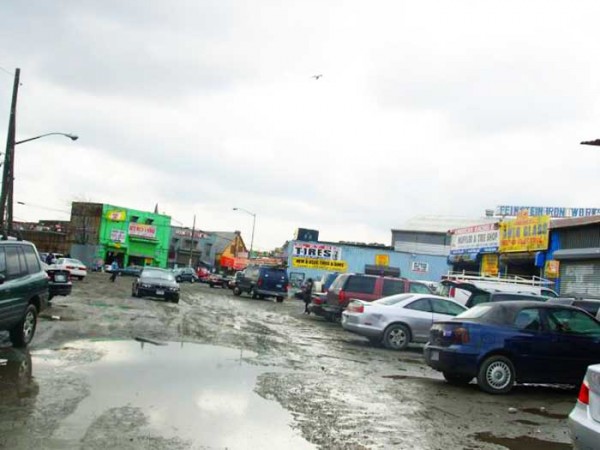
New York’s second largest borough, Queens, has a little secret tucked away in its sprawling suburban style landscape. It’s known as Willets Point, a stretch full of scrap yards, auto repair shops, small businesses and waste processing sites that jostle each other on roads full of pot-holes. There are no sewers or sidewalks and the neighbourhood is known to get wildly flooded during heavy rainfalls. It has recently come in the limelight because of its proximity with the new Citifield Stadium, home of the New York Mets. The city now wants to redevelop it. The many businesses of Willets Point oppose any redevelopment project that would disregard their interests and their efforts of turning this leftover space into a lively industrial area .

Of course, this is only a work space. No one lives here. People commute and the place gets deserted at nights. Nevertheless, for us as Mumbai-based urbanologists – the visit, lead by Roberta Brandes Gratz, author of ‘The Living City’, was more than insightful. Here was a slice of urban life that connected New York to other cities around the world in which raw economic necessity and a tougher set of choices shaped the landscape more than the luxury of planned architectural interventions that is otherwise New York’s signature.


Roberta Brandes Gratz and her “urbanist” ride.

Willets Point is of course up for transformation by development lobbies – or at least there was a talk about it till the economy imploded. Now – like many urban sites around the world things remain in limbo. The fact is though, hundreds of workers involved in the formal and informal businesses that make up this neighbourhood are aware that along with development – everybody wants better roads, drainage and facilities – there will be a fair share of displacement too.

As is the case in several cities – the people who suffer the most from such moves are also those whose ‘wretched’ lives are evoked as the very reason for validating such transformations. And yet nothing really changes for them, wherever they may happen to be.

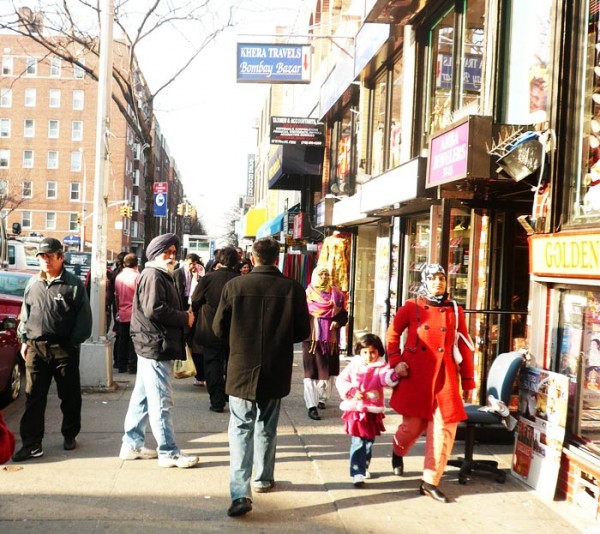
In all likelihood, several of the workers in Willets Point also live in those neighbourhoods of Queens in which issues of overcrowding, illegal merging of economic and residential activities and illegal businesses have become a major cause of civic concern. All around Jackson Heights (also known as little India/Pakistan/Bangladesh/Nepal) houses and garages are packed with immigrants from Asia and Latin America. Many of them have come to the US to work and send money back home and therefore value a cheap rent more than space and intimacy.

Willets Point, Queens, NYC
Rahul’s flair brought us right to ‘House of Spices’, the biggest distributor of Indian food in the US, opperating from Queen’s Willets Point.

From the outside, as you walk through the streets of Queens you would never guess the immense ferment going on beneath. According to Seema Agnani, an urban activist affiliated to the not-for-profit initiative ‘Chaya’ the anxieties of local civic governments are linked to the mismatch of their expectations with the newly arriving populations who have their own notion of what is appropriate urban living.


Jackson Heights, Queens. Queens is the most ethnically diverse borough of New York City.

Thus, a landlord may see no problem in allowing larger families to occupy a space ostensibly designed for a family of four. But this is enough reason for the authorities to issue a notice and declare the residents as illegal occupants.

Similarly, it often happens that the sheer need for survival forces people to run businesses in residential zones that are not commercial areas forcing the emergence of a grey, underground economy.

Strolling through the seemingly quiet tree-lined streets of Queens, we found it intersting that the same words which are used to justify displacement and redevelopment in Mumbai – overcrowding, immigrant populations, informal economy – are also part of the vocabulary of New York city planners and developers. As traveling urbanologists we always learn more from similarities than differences.


Movie on Willets Point showcasing residents’ views

Mess is More

April 1, 2009


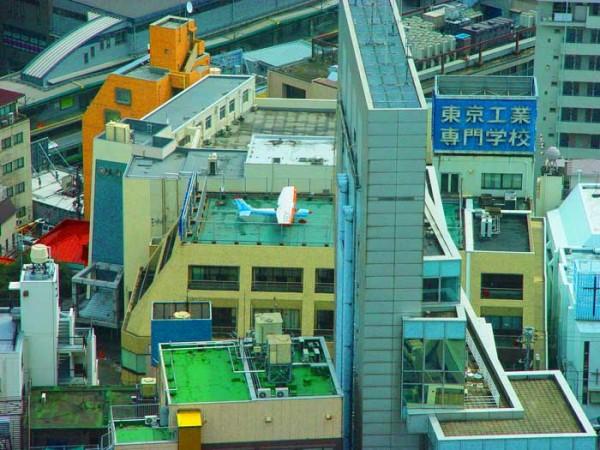
Shibuya, Tokyo: The Japanese capital, which is also the biggest urban agglomeration in the world and a model of efficiency, is often described as an urban mess.

“Mess” belongs to the same four-letter words family as “slum”, “junk” and “dirt”. These words describe an useless, problematic and probably stinky thing. Something that needs to be dealt with rapidly and drastically. They justify disgust, white-washing and other slum clearance.

We have been so unfair to mess. It doesn’t hide or lie. Mess is the new pure. It leaves everything in the open. Think about any of the hundreds of construction sites in a city like Mumbai: the large hole in the ground lets you see the canalization system – or the absence thereof -, tents or shanty cottages where workers live, raw material, cables, machines everything that goes into the building and all the garbage produced by the construction.

Mess is everything together at the same place and at the same time. It is confusion (with-fusion) to the fullest.


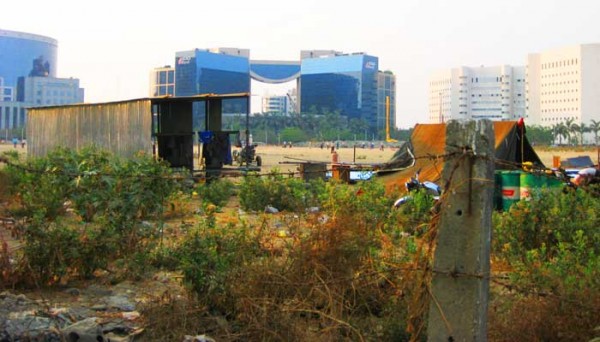
Construction site at the Bandra-Kurla Complex, the new financial centre of Mumbai. Migrant construction workers stay in tents and shacks on the site. The prehistory of many slums is often a massive construction project.

95% of our DNA for which no function has been found is called “Junk DNA”, inferring that it is useless. This is how our psychology functions: We dismiss what we cannot grasp. Nothing unsettles us more than not being able to recognize familiar patterns and functions. When things are merged to the point that we cannot recognize what they are, we call it junk or mess. In architecture, Rem Koolhaas theorized junkspace as the sum total of the architectural and industrial achievement of modernity. The important word here is “sum”; in the sense of a big pile of things morphed into each others. All parts make sense individually but juxtaposed they become a weird anti-structure, connected spatially but disconnected in every other way, at first sight.


Willet Point: A beautiful messy, informally developed, and amazingly economical auto repair cluster adjacent to the new CitiField stadium in the borough of Queens, New York City.

Anthropologist Mary Douglas said that dirt is simply ‘matter out of place’. Meaning that more often than not, what constitutes dirt is not it’s intrinsic properties. It is about where it is located. Something gets classified as dirt when it is found where it should not ‘rightfully’ be. Thus the category dirt is immediately linked to evaluation and subjectivity. Everything that is dirty becomes part of a larger scheme of things of which we approve or disapprove. She also suggests that since dirt is so much about the subjectivity of placement, it always relies on metaphor and allegory and shapes our worldview in subtle ways.


African street vendors selling affordable Prada bags and more in Barcelona.

The fear of dirt comes from perceptions about its ability to change location. Dirt is often perceived as animated or full of animated things that are out of control and potentially transgressive. Because these things are not easily identifiable, they are always threatening. Who knows what might jump out of the dirt pile and bite your neck? Consequently, it either needs to be fixed – or destroyed – especially when it starts taking a life of its own.


Tepito Market in Mexico City. Probably the largest ‘informal’ street market in the world. These clothes were sold for 1 peso.

City planners often label entire neighbourhoods as slums, by which they mean dysfunctional and informal habitats that should be redeveloped. Slums are often imagined as threats to the city: terrorism, crime, disease. Large chunks of the city which have been ignored and left to rot for so long, suddenly emerge as autonomous organisms within the city. What’s more, they keep on growing and spreading their tentacles everywhere. They recycle and produce, turn leftover spaces into markets, even enter your homes and screens -till you realize that you are part of it. The informal economy is on your screen and in your wallet.


Collective laundry space used by slum dwellers living next to Banganga Tank in Mumbai.

What makes slums look so messy is their dense piling up of uses and functions. And since everything is so interconnected, social networks, economic activities and the built fabric, it is impossible to distinguish one thing from the other, as if each part was contaminating the other. The standards response is to negate it all. Forget generations of incremental development, creative responses and collective arrangements. This is just a SLUM, one big dirty pile of things that are fusing into each others and confusing us a little more everyday. It should be cleared, masterplanned and redeveloped with neatly segregated and orchestrated functions. Live here, work there and play somewhere else. Or even better: work here and live out of sight.


Last village (labeled as a slum) to be cleared in Honk Kong in 2001. In the last years, dwellers were forbidden by the authorities to repair their housing and do any new construction.

From the world of germs to those of immigrants, from hygiene to unsuitable, dangerous habitats – the discussions of urbanism and dirt are full of mixed metaphors and wrapped morals. Playing with these words and investigating their psycho-cultural meaning could perhaps help us understand the way they have been used to justify all types of abuses. There is more to slums than meets the eyes. We should probably stop bugging on the appearance of slums start understanding them as relationships and processes in motion responding to context and aspirations.

Of UFOs and Futuristic cities

March 24, 2009

One of the most dramatic consequences of the current economic recession in the United States is the physical decline of once prosperous cities. By decline one does not simply mean a couple of run-down streets but the total collapse of neighbourhoods. While the reputed availability of homes in Detroit for less than US $ 10,000 seems like a worst case scenario the reality is darker. Apparently, near Cleveland abandoned homes are being auctioned off at even lower prices and in some cases are being stripped off their relatively more valuable accessories to make reasonable margins.  Even in richer cities over-built spaces that cannot be maintained are being re-used and adapted for other services. Shopping malls are being converted into under-used public libraries (which may not be such a bad thing) but what really disturbs many concerned citizens is the rising tendency of civic governments to cut costs by shutting down or reducing the strengths of schools, public transport and public hospitals. To add to the dystopic scenario one has also come to frequently see the public distribution of free food for the hungry and blankets for the homeless in some big cities.

Of course for countries like India which still live comfortably in two worlds – with starvation and thirst on the rise in the lives of as many people as exist in the entire United States on one hand and a still growing and relatively prosperous economy on the other  – the lessons to be learned are considerable.

There is even less reason to invest in cities that drain energy and are expensive to maintain. Absolutely no reason to invest in a landscape that is filled by the urban equivalent of empty calories – mirage buildings and structures that are fuelled by a volatile speculative economy which pushes millions to live in infrastructure deprived neighbourhoods.  And simply no value in promoting thoughtless real-estate development projects that build on manipulated market realities.

Of course official discussions about the state of the world rarely mention the holy cow of construction related activities and investments as being major factors responsible for heating up the economy in the first place. The fact that these provided a false shield of expectations and aspirations that justified over spending and over-investment is something that cannot be empirically proved in a discussion that is so centred on symptoms. These are usually about financial mismanagement and the presence of what NYU based Prof. Arjun Appadurai  slyly refers to as UFOS – or Unidentified Financial Objects. However as urban engaged citizens we can certainly take the hint and express what we experience.     

What is undeniable is that everywhere in the world all those who have been resisting the whole-sale destruction of neighbourhoods and habitats that were being eyed hungrily by real-estate developers and construction companies are now heaving a sigh of relief. From New York to Panjim, from Mexico to Brasilia, the one thing that even recession hit concerned citizens feel happy about is the temporary respite their efforts have received thanks to the economic melt-down. At one time, money coming from mysterious sources would flow like water into huge construction projects making any attempt at reasonable debate and discussion futile. Now in many cases – especially where the recession has had a stronger impact – there is silence. In countries such as India which are still chugging along, the situation is a bit more unpredictable. Things could go either way.

Yet countries such as India are in a special position to make fresh choices. They simply need to accept the fact that there are several counterpoints to markets connected to the shimmering ethereal one in ’stockland’. There are real energies that flow through the streets of big cities and are energized by ordinary citizens going about earning livelihoods and using resources judiciously out of sheer necessity. They have ably demonstrated their ability to make workable habitats out of nothing. For once let’s trust these energies and see how its users mobilize resources to keep improving their environments and create great cities the likes of which have never been seen before. 

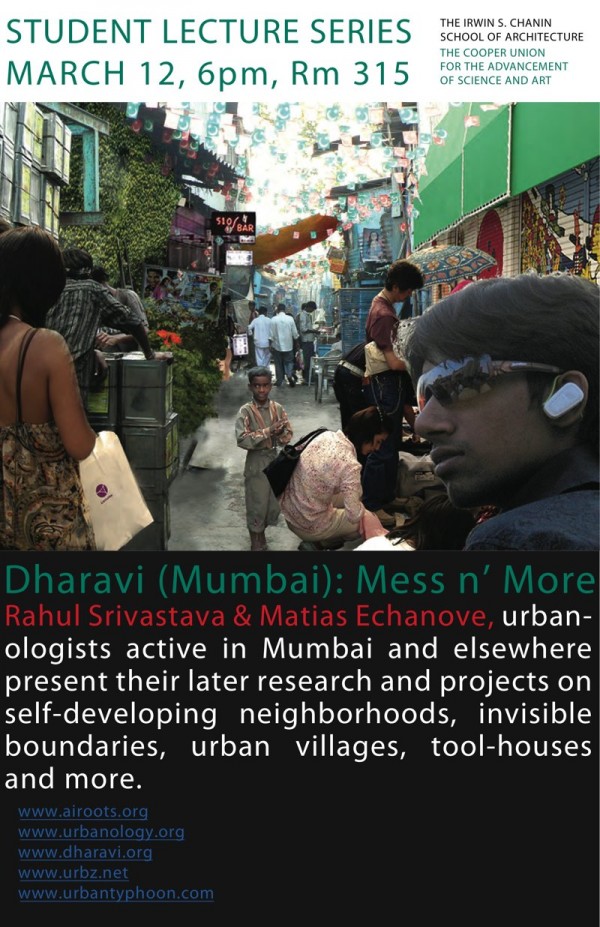
Cooper Union Lecture Series 09′ Thurs 12.03.09

March 12, 2009

« Previous PageNext Page »