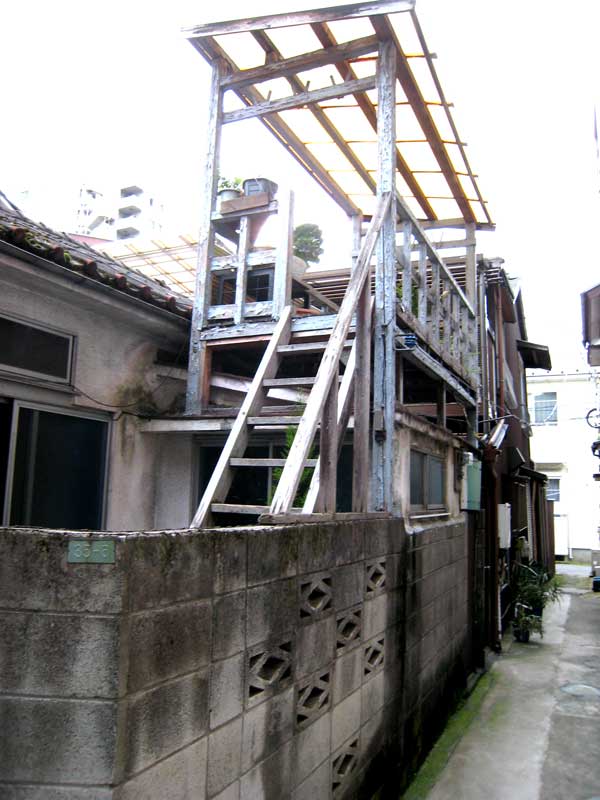
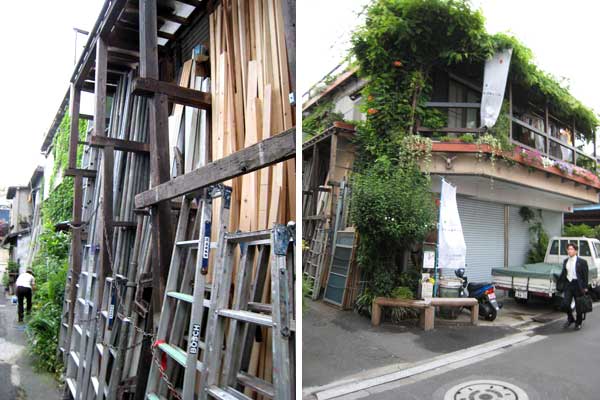
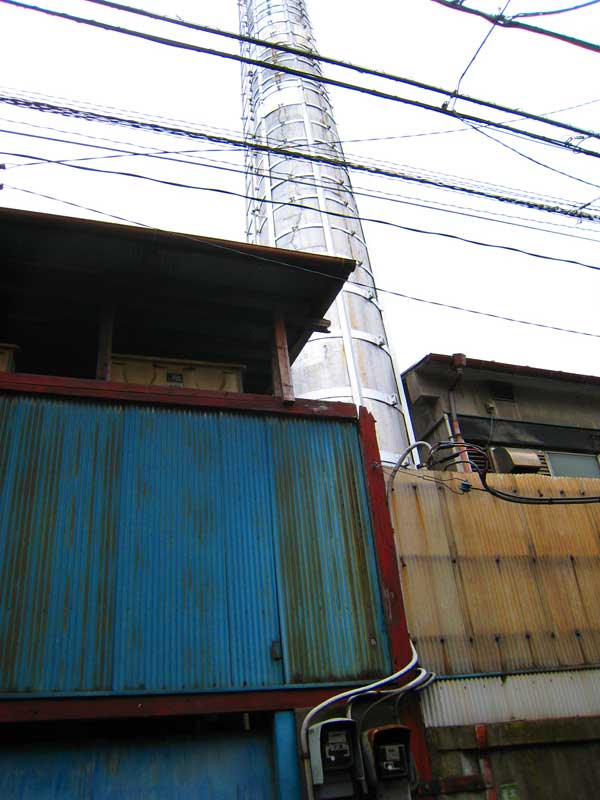
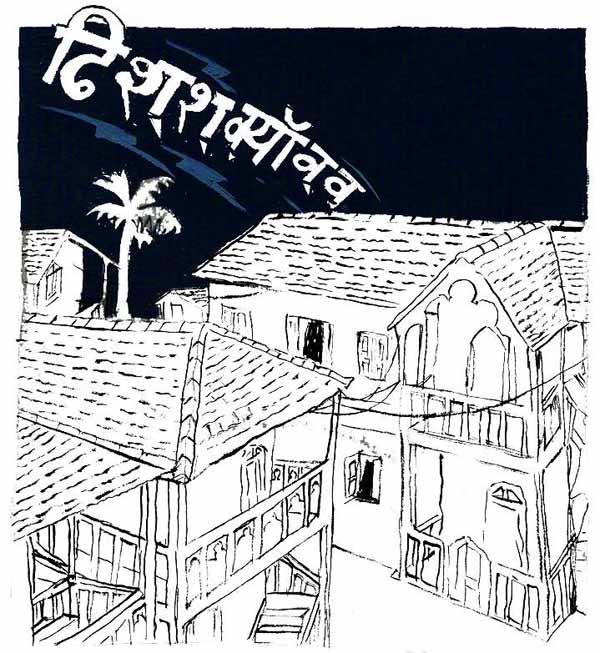
The future of Mumbai’s Eastern Water Front is currently being envisaged in diverse ways. The discussions and debates being provoked by the port authorities, the media and the city’s urban planners reveal a lot about the political and economic choices that the docklands – as well as the city at large – have to make.
Recently, the region has generated a particularly intense argument about its development as part of an integrated vision for Mumbai’s future. The argument pushes for the use of allegedly surplus land in custody of the port authorities. This has, in turn been countered by the controlling authorities, who believe they are a functioning space, in need of every inch of their land and in no mood to relinquish control.
Both these positions avoid a negotiation with the region’s social histories. The Eastern Water Front – or the Docklands – of Mumbai are also a cluster of localities, with distinct historical experiences. The conflicting positions mentioned above do not take into account the abilities of the people living in the region – as well as of Mumbai’s citizens as a whole– to contribute to the future use of that space in creative ways.
It is important to see the docklands as more than the question of formal proprietorship that the Port Trust has over it. Even, for that matter, as something beyond the untidy network of tenancy relationships that the trust is tied with other large organizations, including industrial houses that operate from its premises.

It becomes perhaps, important to locate a space where the inhabitants and the workers of the docklands find a legitimate space for contributing to these discussions. Most of them belong to communities that have traditionally been marginalized and can easily be recognized to be the dominant faces of Mumbai’s poor populations.
In this context, maybe we have to locate the drama unfolding over the Eastern waterfront within the larger politics of urban transformation occurring in the city – a transformation that should not be allowed to ignore its impact on the inhabitants that occupy the space as workers and residents. More importantly, it cannot be allowed to ignore the social location of these inhabitants within the larger fabric of citizenry of the city.
In addition, an examination of the debates on the use of the waterfront reveals that the biggest obstacles to any intended rearrangement comes from heavy institutions that control the area. Most of these are government agencies like the Urban Development Ministry, Defense Ministry, Surface Transport Ministry, The Port Trust itself, The Customs, The Mumbai Metropolitan Region Development Authority, the Environment Ministry, and other players that push and pull the political tides of the waterfront.
In this light, it can suggested that if there is any force that has the potential to bond with those interested in the re-development of the region, and get these agencies to respond positively, it is the inhabitants themselves. As a political force, they are the only ones that can prod inert institutional agencies into productive action.
However, this can only happen if serious attention is paid to mobilizing the people and integrating their needs into the plans being envisaged. So far, though, there seems to be little indication of a move in this direction.
It becomes crucial to foreground the fact that the majority of inhabitants of the docklands include scheduled castes and scheduled tribes, upper and backward caste Hindus and Muslims from the impoverished districts of Uttar Pradesh, Bihar, and Maharashtra. Other communities include the Kamatis (traditional labourers from Andhra Pradesh) South Indians, Bangladeshis, and Muslim communities from the South.
They work as unskilled construction labourers, drivers, domestic servants, scrap collectors, loaders and unloaders, factory workers, service industry labourers, domestic servants, stone breakers, vegetable and other commodity sellers, drivers, gutter cleaners, shop owners, bus conductors, restaurant owners, mechanics and clerks (ibid.).
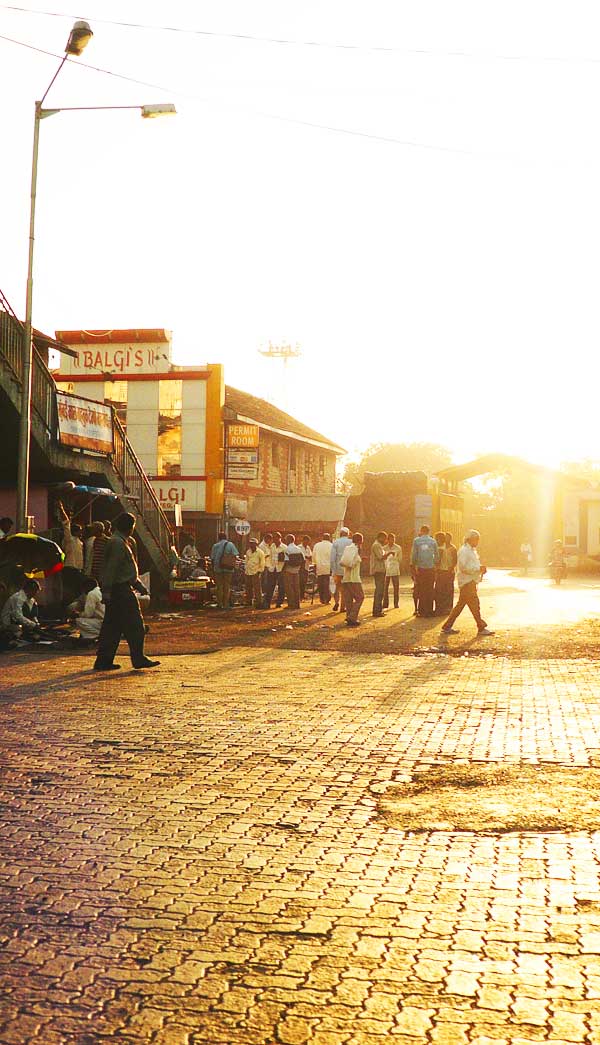
Most of them belong to the informal working class populations working on daily wages. Their homes may have access to shared water supplies and metered electricity but a majority of them do not have access to schools for their children and appropriate medical facilities. Many of them were once part of dock-unions that existed (and in some cases still do) in the region. However, the larger political changes in the city – from the 1980’s onwards completely transformed the trade union movement in every work sphere – staring from the mills and the universities and moving all the way to the docklands. Since then it has been even more difficult to mobilize the disparate workers of the space into any organized political formation.
Discussions with some of them indicated that the intended transformations of the docklands could become a rallying point for the workers to come together – and these could well be stimulated by the planning agencies – provided of course the interests of the workers and inhabitants were duly safeguarded.
One observes that the socio-political forces that influence the rest of the city also shape the docklands. Conversely, the footprint of the docklands also spills way beyond the official boundary that is usually used to mark it off. The influence of the docklands has always seeped into many aspects of the city’s history and structures – especially of the development of its mills and industries. Moreover, it is also evident in its middle-class imagination – especially amongst the older neighbourhoods as well as the habitats that exist along the periphery of the docklands. Interestingly, all these neighbourhoods are connected in intimate ways.
If one examines the bus routes that were started over the years, between ‘Ferry Wharf’ – the most public of sites in the heart of the docklands – and different localities in the city, one can see these interconnections very clearly. There are routes that line the entire eastern waterfront, besides some unexpected connections into the oldest middle-class trader dominated neighbourhoods. Expectedly, there are routes that connect the diverse neighbourhoods of the docklands with those of the mill lands in central Mumbai. The connecting neighbourhoods include: Chor Bazaar (that treasure trove of fake and real antiques that embody many hidden stories of the docklands), the Dalit neighbourhoods of Wadala, the fishing communities along the coast, the working class residential enclaves of the mill lands, the nineteenth century middle-class neighbourhoods of Kalbadevi, Mohammadali Road, Mazagaon and Girgaum, the working class neighbourhoods of Antop Hill and Sewri, the tourist lanes of Colaba and the footpath slums of P.D’Mello Road.

Mumbai, like most cities, has always embodied many layers of social histories, histories that express themselves through different ways of imagining the city and realigning its geographical orientation. In this context, the docklands of Bombay have always been part of the city’s public imagination – even if physical access to all parts of the eastern waterfront has been a restricted affair. Visits to the Ferry Wharf (for recreational trips to Elephanta caves or Uran islands), the iconic Gateway of India, touristy Colaba Causeway and the elevated dock parks of Mazagaon hill are as integral to the city’s recreational past-times as the better-known Juhu Beach and Chowpatty situated on the west coast. For the millions of residents who actually live on the eastern side – including the ‘government servants’ living in the official buildings and colonies and the commuters of the Harbour Line Railways- the docklands are an integral way of experiencing the city.
A well known Marathi humorist Pu La Deshpande, has an evocative essay in his travelogue, ‘Apoorvai’ written in the seventies, in which he describes the bustle at Ferry Wharf on Saturdays when migrants from Alibaug – a coastal district of mainland Maharshtra – would arrive in boats and stay on for a few days to work in the docks. Even Hindi movies like ‘Deewar’ (1970s) and ‘Hum’ (1980s) have built narratives around tales of dockland underworld dons.
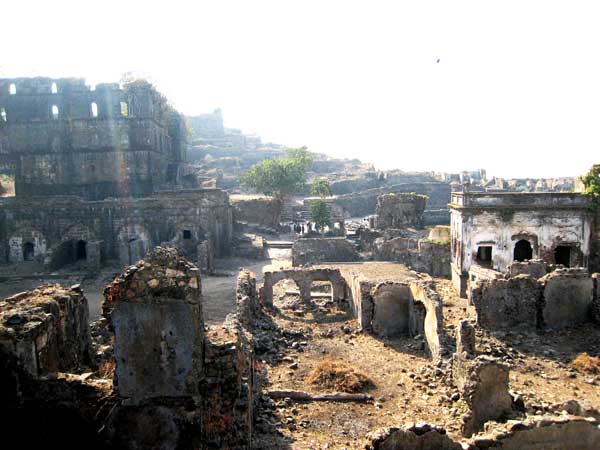
Unfortunately, recent narratives around the docklands – including those by urban planners – tend to represent the docklands as an isolated, decrepit space, a relic of a bygone era, a pre-industrial past, and ultimately, a space at once anachronistic to the city’s present day status as a global financial centre and one ready for new urban interventions.
Such narratives use the examples of other port cities from around the globe and idealize the ways in which those cities have reinvented similar spaces to create new resources for urban plans, designs and stimulation of real-estate prices.
It is vital to question such narratives since they ignore the peculiar manifestation of the docklands in cities like Mumbai. With its special history of surplus informal labour, the social composition of its poor communities and the unpredictable influences of electoral politics, Mumbai’s political impulses push for a different paradigm for urban planning. One in which there is a greater participation from the ground and more agency for the current inhabitants, besides of course, making provisions for the concerned authoritative official bodies. These impulses can be frequently found in the rhetoric of citizen-activists and political actors who are part of the city’s public sphere. Unfortunately, they have more often than not been quashed. The most recent example – and one that continues to haunt those interested in working in the docklands – is the failed attempt of the activists to protect the mill lands of the city.
If one ignores these impulses altogether, one can land in a situation in which the firing lines of opposing parties (in this case the port authorities and the civic planners) become hardened and rigid. Already the MpBT (the port authority in the city) is taking a position that restricts a productive conversation for an imaginative re-use of the docklands. It uses its colonial heritage of controlling the land to assert its first right of use and behave like a feudal proprietor. The civic planners, on their part, continue to evoke apocalyptic visions and use media pressure to push their own agendas.
Both, however, ignore the rich resource that exists right in front of their eyes – the people who live and work in the docklands.
They also ignore the potential of harnessing the social imagination of the docklands – that has been integral to the way the city evokes its history – as a force of negotiation and bargaining. After all, informed citizens are aware that the history of the city and the port overlap considerably. Unfortunately, whatever few narratives that are produced about the architectural and official histories of the port areas (mostly in the form of coffee-table books) and the docklands, tend to ignore the social histories embedded in the region. Instead, they encourage a nostalgic, colonial imagery that does not get much empathy from the political actors looking for populist issues nor does it excite the establishment.
What is needed is an approach that incorporates people’s histories of the region, the political energies that flow through it and need to use the social imagination of the docklands as a tool to negotiate with the port authorities. However, this is not just about strategy. This is also about pushing for creative ways of imagining the re-use of docklands in cities like Mumbai – cities, which have a strong presence of informal economic and habitat systems. There is a strong case being made by planners and activists in many parts of the world to integrate these systems into plans for urban futures.

In the case of Mumbai this may express itself in ways in which the portly duties of the docklands can continue to function to optimum levels. At the same time the space can still become part of the larger planning process of the city, and can also be claimed by the citizens of the city as a whole but in a manner in which the current inhabitants and workers are allowed to be important stakeholders – as important as the port authorities themselves.
In the few instances when the port authorities and planners do use the spirit of political participation, it is usually through NGOs who aid them in clearing the space of infrastructure-deprived habitats – disparagingly referred to as slums. To facilitate this they represent the space as being overcrowded and derelict – as if this is unique to the docklands and does not affect the city as a whole. The point is that the docklands and the city at large are connected in deep ways and the processes at work in one affect those in another. If one isolates the eastern waterfront as a distinct geographical region and proceeds to highlight a certain kind of visual imagery and narrative for it in distinct terms – one does not get a complete picture.
To reiterate; it is necessary to bring to light the social histories of the neighbourhoods that are part of the docklands footprint (and, as mentioned above, the footprint is much larger than the physical boundaries that have been officially designated as the Eastern Waterfront). This is one important way through which the actors who live in the region may be able to play an important role in the future development of the region. They would also be able to pressurize the port authorities to be more yielding to this process, without imposing an apocalyptic vision of a total economic failure – a vision, if it is allowed to go out of hand, can actually contribute to the evacuation of the people who live there. Of course, this process would need to be accompanied by the city envisioning itself as a more accommodating entity – where it would look at the history of its informal labour as productive and dynamic. More importantly, it would have to be less suspicious of the electoral political process and the noise create by citizen-activists that are unfairly represented as painful hurdles to wholesale, momentous architectural transformations of the region.
An examination of the ongoing debates around the future of the Eastern Water Front reveals that the language being used is one of governance, administration, and political control. There is a certain kind of political rhetoric that is being evoked to justify the choices being made. In this light, to understand the processes of the political imagination of the city, its peculiar relationship with the region and the historical background of its social composition, it would be useful to make a brief detour into the region’s history. This detour may also provide insights into the reasons why the port authorities of the city tend to be so imperial in their attitude towards the city – especially when it stakes a claim on the precious estate.
The presidency cities of colonial India – Calcutta, Madras and Bombay – were shaped by a combination of political forces, economic compulsions and social constraints that were peculiar to their status as administrative arms of an imperial government. They were centers of power within their own sub – empires. They created circles of influence that connected with their hinterlands and other international centers within easy reach. For Bombay, this included inland Maharashtra, the Konkan coast, Gujarat, all the way to Karachi in Pakistan and – via sea routes – West Asia. The connection of the city to these regions, could be traced through the history of migration into the city during the colonial period: Parsee and Bohri businessmen, Jain merchants, Surati and Kutchi traders from Gujarat, labour from the Konkan coast, service providers – including cooks and educated domestic help – from Goa, migrants from Iran and Afghanistan or Sindhi dealers from Pakistan. There were also connections between the presidency cities themselves. These facilitated leapfrogging over the dozens of kingdoms in the hinterland to allow the entry of skilled communities directly from Madras and Calcutta – especially during the time of the cotton boom in the early nineteenth century. Like these two cities, Bombay’s growth was directly connected to its port-activities, mostly to do with trade of cotton, but in the case of Bombay also, opium.
The city in the early nineteenth century centered entirely on the port. However, it also supported the development of an administrative and social infrastructure that helped in connecting to the region as a whole. The city rarely imagined itself as a distinct territorial space. It was always part of an expansive spread into the region.
The East India Company was disbanded in the middle of the nineteenth century. The colonies in South Asia began to be governed directly by the crown. Very soon, judicial systems, systems of administrations, governance, economic, educational, cultural, and financial institutions were set-up. They too however, did not necessarily locate their center of gravity within the municipal limits of the city in question. The city of Bombay became the capital of the Bombay Presidency that connected Karachi in modern-day Pakistan to Sawantwadi, a town that bordered Portuguese Goa and moved all the way into the hinterland up to the state of Hyderabad.
By the turn of the twentieth century, Bombay had become a larger than life space within the region. It’s influence spilled over imperial firewalls into Portuguese Goa to attract thousands of skilled migrants. They moved to the city for jobs involved in shipping and clerical work in the ports. Dock labourers moved in from the Konkan coast and State of Hyderabad. Most of these migrants occupied that special enclave within – and often indistinguishable from the city at that time – the docklands.
In the early twentieth century, the port grew civic and social tentacles from the dockyards all over the island – especially through its contribution to the development of industrialization in the city. However, most of the older neighbourhoods that had emerged with the development of the docks a century earlier, continued to thrive. The traders of Kalbadevi, Girgaum and Mohammadali Road, the clerks and secretaries from Mazagaon and Byculla and the prosperous trading families from Malabar hill emerged as the city’s new middle classes. The more prosperous amongst them were the ones to invest in mills and industries.
Even during these years of industrialization, the city’s economic and cultural identity continued to be shaped by trading activities centered on the port. While industries had their own social base – predominantly an organized working class and its industrial elite, a large chunk of the city continued to reflect the social profile linked to the port.
This was mainly reflected in the middle-class world of traders and shopkeepers, the huge working-class presence of dockworkers and the equally numerous presence of hawkers and small traders that roamed the streets of the city to provide services and sell goods of all kinds – especially those brought through the port.
This world is often not represented in the official working class history of the city that concentrates rather single-mindedly, on industrial labour. However, by the middle of the twentieth century, the middle-classes that had grown around the port-related trading activities began to be dominated by the educated, service-classes – especially the administrative staff linked to banking and financial institutions and the new industrial elite. Even so, the trading middle-classes, with their fuzzy working-class origins that had grown around the port areas – were still visible in the older neighbourhoods of South Mumbai.
Today, you can still see the vestiges of this social history in present day habitats – even as they rapidly give way to newer structures, mostly multi-storied luxury apartments. You can still see a handful of Goan villages, Maharashtrian coastal towns, dense Gujarathi urban enclaves, Benares style Ghats in the heart of the city – most vividly still seen in the neighbourhoods of Banganga, Kalbadevi, Girgaum and Mohammadli Road
This continuity from the past to the present is still possible to trace – even though the neighbourhoods are rapidly changing through rapid real estate development.
The contemporary scenario of the Eastern waterfront neighbourhoods however, tells a slightly different story. It facilitates an entry into a discussion on informal economic systems that dominate the world of work and livelihood in the docklands.
The Eastern Waterfront proper includes the residential neighbourhoods of Antop Hill, Mazagaon, Colaba, and Wadala. These comprise a complex mix of communities, including Parsees, Goan Catholics, East Indians and Hindus and Muslims from Gujarat that make-up its middle and upper – middle classes. The habitats in these areas comprise mainly of four to eight story apartment blocks.
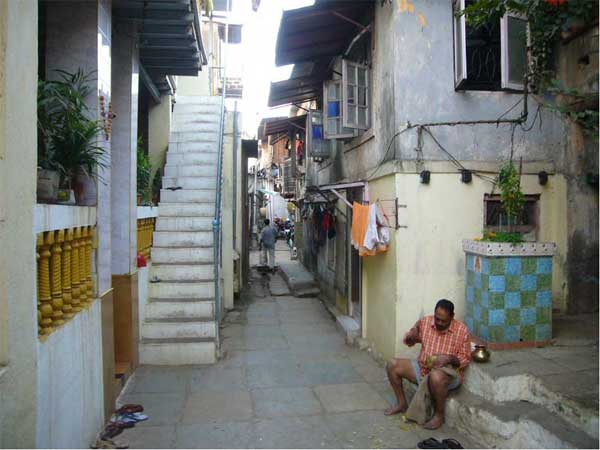
The working classes in these areas are of the same social composition as described earlier in the essay – though they are present in smaller numbers. Their proportion increases near the docks where many of them live in infrastructure-deprived habitats – mostly in and around the Prince’s docks, Bhau Cha Dhakka, Darukhana and Sewree Fort. There is a large Dalit neighbourhood in Wadala that comprises of mainly scheduled caste communities. There are sharp inequalities in terms of civic infrastructure between the middle-classes and poorer neighbourhoods within the entire region. To develop an accurate profile of the working classes of the docklands, most of whom are part of an unorganized workforce functioning in an informal economic set-up, it would be useful to perspectivize them against the larger story of informal labour in the city. The informal sector accounts for 68% of total employment in Mumbai and workers engaged in the urban informal sector form the bulk of the urban poor.
According to sociologist Jan Breman the informal sector can be defined as work on one’s own account, which generates income but is not regulated by an explicit employment contract and enjoys no protection. This includes people who work in the street, in homes, small-scale enterprises, power loom workshops etc. The informal sector workers work for as long as their employers require them to. Sometimes, these workers may be working in the context of a secure, organised workplace but their relationship is contractual and therefore classified as informal. According to him, the move from formality to informality in the work context almost immediately means a fall in the standard of living. The lower-income classes are mainly visible in these new neighbourhoods as domestic servants, street vendors, repair and odd-job men, cleaners, day or night guards. The realities of the informal sector are vividly expressed in the existence of slums.
In the context of Mumbai, the informal economy also refers to the survival economy of the poor who occupy a grey zone of commercial exchange, by providing skilled or semi-skilled labour. The privileged within poorer economies and polities find informal economic transactions very profitable, mainly since it keeps labour costs low. It also allows corrupt municipalities to exploit physical space for commercial gain rather than for the welfare of the poor and extort bribes from the poor entrepreneurs who are never given full status as valid citizens earning their livelihood. The only reason why the informal economy continues to grow is because it subsidizes the economy by keeping labour costs low.
This scenario is clearly evident in the ship breaking, construction, scrap collection, stone breaking, loading-unloading, iron and steel workshops and restaurant-related activities that exist in the docklands. These activities make significant profits for the employers mainly due to this existence of an unregulated labour market that facilitates subsidies.
The workers have low wages and the self-employed have tiny incomes. The working conditions are unregulated and most of the workers are exposed to high level of toxic substances given the nature of the activities in the area – especially in the ship breaking yards.
Most of the workers have been around for more than twenty years. They had migrated from rural areas and small towns where their social and economic location was already marginal. Their move to Mumbai represented a freedom from social restrictions and bondage and a marginal improvement in economic relations. On the whole, though, their migration to the city is not accompanied by significant social mobility. Their children still do not have access to good quality education and basic medical facilities.
At this point it becomes mandatory to underline how traditional social stratification that is the foundation of India’s social histories, epitomized by the caste system, gets reflected in the city’s socio-economic arrangements. The fact of the matter is that most of the urban poor belong to traditionally marginal communities like the Dalits and what are termed, other backward communities. The city absorbs the poor migrant into its economic system, which is dominated by informal arrangements. These do little to weaken the traditional modes of social stratification in which the migrants are embedded. The absence of basic educational infrastructure only ensures the entry of a new generation of informal, unskilled, or semi-skilled workers that continues to perpetuate the system. Illiteracy levels in cities such as Mumbai remain extraordinarily high in its slums– even when compared to rural contexts. The only mode of livelihood available for the urban poor is in informal economic spaces, which have their own limits to facilitating social mobility. In addition, since the context in which the informal economy operates is really the slum, this completes a vicious circle of social, historical, and economic equations that trap the urban poor. The poverty that is visible in the docklands is very much an illustration of this story. However, it must be noted that it only builds on what is happening in other parts of the city as well. This story is in no way peculiar to the docklands lands.
Today, globalization in Mumbai is very clearly being identified with physical transformations of neighbourhoods, transformations that accommodate post-industrial, service based economic activities and attempt to push out manufacturing and informal trading and service-based activities towards the periphery of the city. Infrastructure deprived habitats – or slums and shantytowns are seen to be an expression of these dated urban activities and much energy is invested in erasing these spaces.
The docklands are seen to be a huge potential space for such a pot-industrial transformation. The NGOs that operate there are already playing a major role in the resettlement and rehabilitation of slum-dwellers. There is hardly any discussion with regard to an improvement of the civic infrastructure of the poorer neighbourhoods. There is even little discussion on investing in education to upgrade the skills of the next generation of the city’s poor citizens. Except for an NGO like Akaansha that concentrates on education for street children, there is negligible investment in this sphere.
Such a restricted approach to social space is not only a reflection of the impatience of global capital that is eternally on the quest for new, comfortable places to nest its aspirations, but also of the insidious way in which the system of caste continues to hold social formations in its clutches within such urban supposedly globalized spaces.
One can see the disinterest to tackle these issues writ large on the faces of all the social actors involved in the docklands story.
The port authorities rely extensively on subsidies provided by informal economic arrangements and are more interested in maintaining their stranglehold on the property. They prefer dealing with the presence of informality – symbolized by the presence of infrastructure-deprived habitats. After all, more directed transformations on the social front will mean taking greater risks about their control over the territory. The planners and architects view the space as being part of a larger story of the metropolitan region’s revival (with their elaborate plans of bridging the island to the mainland, opening up the eastern waterfront for the public at large etc.). They find it difficult to incorporate social concerns with regard to mobility, education, and transformation of economic relationships into these plans.
The most drastic expression of this disinterest is the silence maintained with regard to the erasure of the habitats that house the region’s informal arrangements. That the infrastructure habitats have to be erased is a fact accepted by all – that is why there is little resistance even from activists and NGOs. At present, the moves of erasure are restricted to habitats that create obstacles for public transport projects – mainly the railways – but there is little reason to believe that the process will not be employed for other, less pressing and more profit – oriented projects in the future – especially if the urban planners have their way in the docklands.
The reason why homes of the urban poor are seen to be the most obvious signs of dereliction – when in fact their ability of subsidizing through informal arrangements should signal economic dynamism – is easy to understand. Urban transformation is as much about aesthetics as it is about efficient and profitable use of space. Moreover, the erasure of spaces of the poor, allows for both these ideals to be expressed at once. Of course, the additional price that the poor have to pay is traveling great distances, (after they have been rehabilitated and relocated) at extra cost, to continue to subsidize the profit-oriented economic transactions, which still prefer to use their cheap services.
No wonder there is little interest in understanding the social histories that are part of the docklands space – even amongst the more progressive votaries of its transformation. They are simply not considered to be important voices or stakeholders in the planning process. They can be empathized with or dealt in the plans as objects worthy of assistance and help, but they can never ever dream of becoming the agents of the ongoing transformation.
Nevertheless, it would be facetious to blame the specific actors in the docklands as being the sole proponents of such thought. The city as a whole treats its poor this way. The modus operandi being employed by the actors in the docklands only reflects the larger choices that the city regularly makes. Take for example – the attitudes reflected in Dharavi. The following is a quote from a paper written by an urban studies scholar and activist Matias Echnaove;
Some people, by ignorance or political calculation, picture Dharavi as a wasteland full of tent-like temporary structures; an immense inhabited junkyard crowded with undernourished people hopelessly disconnected from the rest of the world, surviving on charity and pulling the whole city’s economy backward. The reality could hardly be more different: Dharavi is a highly developed urban area composed of very distinct neighborhoods with a bustling economic activity integrated socially, economically, and culturally at the metropolitan, regional and global level.
This is as true of the docklands as it is of Dharavi.
It may seem like a far-fetched dream to visualize a forum in which activists and NGOs come together to mobilize the inhabitants and workers of the docklands. But it is one worth imagining.
Such a mobilization can express itself as a political force. One that negotiates with the port trust authorities about flexible usage about the space by keeping in mind the needs of the port, the inhabitants and workers and the city at large – necessarily in that order. However, to do this, it would also be important to examine the many social histories that are embedded in this rich historical space and use these to evoke an interest in the city as a whole about this space.
In a small initiative in a village in Girgaum, a neighbourhood in South Mumbai, PUKAR – Partners for Urban Knowledge Action and Research, Mumbai engaged in opening up the discourse on habitats and heritage activism by focusing on a small hamlet – dear to the city’s heritage activists – called Khotachiwadi. The initiative attempted to get the whole city engaged with the neighbourhood so that it could and see how its story was linked to that of the whole city. The overwhelming participation of the city’s residents at the festival organized by the residents of the village, was a testimony to the success of the strategy. It was not difficult to understand how the village won so many enthusiasts who lived scattered all over the city. The idea was simple; convince them that Khotachiwadi was about the city as well.
With regard to the docklands – one does not even have to try so hard. The social histories and the narratives are relatively well known. Activists and concerned citizens simply need to get engaged with these stories and with the lives of the inhabitants and then circulate them in the city through the media and other channels of communication.
It is only when such mainstream enthusiasm gets generated – combined with grassroots support from the poor inhabitants themselves – can one unleash enough energy to bring about transformations in a desirable direction – in the direction of a truly global, modernized metropolis. One in which issues of equity are addressed honestly and in which the process of planning is genuinely participatory.
It would be significant if the docklands of Mumbai became the space for evolving a new form of activism, and envisaging new forms of planning processes. Considering how much the city has traditionally depended on the docklands space for its survival – it would only be befitting that the docklands once more rise to the occasion to show the city a new way of dealing with issues of urban poverty and urban futures in a global world.
Bibliography:
1. Anjaria J.S: Street Hawkers and Public Space in Mumbai, EPW May 27 2006
2. Appadurai, Arjun. “Deep Democracy: Urban Governmentality and the Horizon of Politics.†Environment and Urbanization, 13.2 2001: 23-43.
3. – “Spectral Housing and Urban Cleansing: Notes on Millennial Mumbai†Public Culture Vol. 12 No. 3 Fall 2000.
4. Afzulpurkar, D. K. Programme for the Rehabilitation of Slum and Hutment Dwellers in Brihan Mumbai. Mumbai: Government of Maharashtra, 1995
5. Banerjee-Guha Swapna: Shifting Cities – Urban Restructuring in Mumbai, EPW: January 12, 2002
6. Bombay Port Trust: New Cotton Depot at Mazgaon – 1923
7. Bombay First, McKinsey Report: Vision Mumbai: Transforming Mumbai into a World Class City.
8. Bhowmik Sharit and More Nitin, ‘Coping with Urban Poverty – Ex-Textile Mill Workers in Central Mumbai ’ (?)
9. Breman Jan ‘An Informalised Labour System, End of Labour Market Dualism’ ( ? 2002)
10. Burra Sundar: Towards a pro-poor framework for slum upgrading in Mumbai, India (22 pages) Environment and Urbanization Vol. 17, no. 1, April 2005
11. Desai, V. Community Participation and Slum Housing. New Delhi: Sage Publication, 1995.
12. Desai, P. The Bombay Urban Development Programme, Mumbai, India. Third World Planning Review 23 (2) (2001): 137-154.
13. Echanove Matias : Towards an Architecture of Participation:
Activating Collective Intelligence in Urban Systems (Prepared for the NATIW OpenWeb 2.0 Seminar, Geneva, April 20, 2007)
14. Edwardes S.M: Gazatteer of Bombay City and Island, 3 vols. 1909, Bombay
15. Katakam, Anupama: Builder’s Envy, 2006 (http://www.hinduonnet.com/fline/fl2402/stories/20070209002104000.htm)
16. Kosambi, Meera: Bombay in Transition: Growth and Social Ecology of a Colonial City 1880-1980 Stockholm: Almquist Witsell International, 1986
17. Mumbai Metropolitan Region Development Authority (MMRDA). Draft Regional Plan for Bombay Metropolitan Region 1991-2011. Mumbai: MMRDA, 1995.
18. Mukhija, Vinit. Enabling Slum Redevelopment in Mumbai: Policy Paradox in Practice. Housing Studies 16(2) (2001): 791-806.
19. Patkar Medha, Singh S.: Urban Renewal at Whose cost? (3 pages), EPW March 17, 2007
20. Patel, S., et al. Beyond Evictions in a Global City: People-Managed Resettlement in Mumbai. Environment and Urbanization, 14.1 (2002): 159-172.
21. The Port of Bombay: A Brief History: Issued by the Trustees of the Port of Bombay – 1974
22. UDRI, KRVIA: A Study of the Eastern Waterfront of Mumbai, 2004