Speculation and use value in Mumbai

March 22, 2013

dharaviSRS
Photo: Rehabilitation project in Dharavi

Quite a few architects and urban designers have cracked their heads on the urban phenomenon that Mumbai represents. What kind of logic keeps this big, bad city running despite all odds? How exactly does its urban fabric reflect the extreme disparities that have become inexorably attached to the city’s image? What does the mutation of colonial Bombay into global Mumbai mean for architectural forms and public life?

Rahul Mehrotra’s static vs. kinetic city story is one of the most compelling attempts at providing a general understanding of the dynamics and tensions at work in the making and perpetuating of Mumbai’s urbanism. According to him, the static is the official city of built forms, framed by monumental structures, birthed and nourished by broadly premodernist and modernist impulses. Sharing space, often unacknowledged and even unseen, but nevertheless very much present and active is the kinetic city, energized by the impulse of everyday human presence and activity, spilling over streets and public spaces, composed of transactions and the bazaar ethos, especially by resource and capital deprived inhabitants.

He accurately points out that Mumbai’s history and future are unimaginable without the dense trading culture and human interactions that spill in and out of its bustling streets and worn out habitats. Likewise, his critique of rigid notions of architectural heritage and urban futures that defend built space over lived space, is spot on. Anybody who comes to Mumbai and connects with its incredible street life, wrapped around and between its mongrelized Gothic colonial or post-colonial structures can immediately connect to the ideal types of the static and the kinetic city.

Mehrotra goes on to elaborate why Mumbai is essentially a kinetic city which cannot be tamed or reigned in by the static city. He does not fully buy into the standard dichotomization of the city into formal and informal sectors, which can mistakenly be overlapped onto his static-kinetic concepts. Instead, his perspective transforms public architecture into a sophisticated set of practices that involve a layered understanding of architectural heritage. He attributes a more creative role to intangible moments of public life like festivals and street economies. The transformation of the Kala Ghoda art district in Mumbai is a successful tribute to his framework.  It is to his credit as an architect that he uses imagination and a sense of history to co-produce a public project of this nature without investing in another expensive monument to celebrate existing ones.

Sadly, the concept of the kinetic city is threatened by the malaise of over-interpretation. Sometimes instigated by Mehrotra’s own hurried words. For example, it is easy to misread his observations that all structures of the kinetic city are made of temporary and recycled materials or that their limited but productive lifespan is connected to makeshift building techniques. This encourages a tendency to misunderstand some neighbourhoods in Mumbai as being disposable because of a surface reading of their dynamics. They seem to resemble the structures that Mehrotra is describing. We argue that it would probably be wise not to let Mehrotra’s slippery concept slide over the blurry boundaries of South Mumbai, to become a guiding principle to understand habitats such as Mumbai’s so-called slums. We have come across quite a few students of architecture who build on his framework and delve into the issues of affordable housing and the question of slums and shanties.

In the wider context of Mumbai city, the limitation of the static/kinetic framework becomes more pronounced the closer you look. For decades Mumbai’s poorer neighbourhoods have been seen as a kind of soft mobile stock of temporary habitats – easily removable when the right time arrives for good profits to be made. Far from being the recycled landscape one could imagine when listening to Mehrotra, slum notified areas are often made of over-engineered pucca structures, built by professional masons and contractors using industrial construction materials. Their streets are full of registered shops selling mainstream products.  Many of them also double up into what could be called post-Fordist industrial sites, organized in flexible and anti-fragile (as Nassim Taleb would say) production networks.  If there is an appearance of shabbiness to many neighbourhoods it is not because of any intrinsic quality to them but due to the myopic policies of the civic bureaucracy. Unbelievable as it may seem, it is true that local contractors in those neighbourhoods have a stock of special effects to age a building so that it does not catch the eye of a corrupt official looking to make a quick buck from a new (unauthorized) construction.  In some extreme cases, brick and mortar structures are covered up by corrugated iron sheets, to give the impression of being temporary, just to evade demolition.

On the other hand, apart from a few protected heritage monuments, the static city of Mehrotra’s is nowhere to be seen. The logic that rules Mumbai is not that of the static city, but of the speculative city. It may forgo a beautiful heritage structure in its quest for new territories, or even sponsor a street festival, as long as it is eventually allowed to invest in expensive real estate somewhere on the horizon, and get a great view on top and a parking space below. For sure, the speculative city produces all kinds of empty spaces that may look static in appearance, but are actually highly volatile real estate assets traded on global markets. A building and the flats within it can well be bought and sold several times over before having been built, with profits made at each stage –till it bursts. This is the most vivid expression of a speculative value of space that is completely disconnected from its use value. These buildings embody what Zizek refers to as the “virtual, spectral domain of Capital.” (Zizek, 2001: 3/4).

The speculative economy is heated up by infusions of global capital in search for high and quick returns. Indian corporate houses, businessmen and politicians recycle grey or black money sent off shore into real estate projects built only to be sold to fellow investors. It is no coincidence that tiny Mauritius Island, a tax haven, is the first largest contributor of Foreign Direct Investment to India.[1]

In hot speculative markets, land development is not driven by the demand of users, as much as that of investors. This explains the total discrepancy between the demand for affordable housing in many cities and what is actually being produced, which is predominantly high-end residential or office buildings (rarely mixed-use) destined to be traded on a global real estate market. High-end housing continues to be produced in large quantities in Mumbai and other metros despite the fact that, according to the district level data from census 2011, 479,000 flats are lying empty in Mumbai, 10 to 20% of which are not finding buyers [2].

This doesn’t seem to worry the developers and the authorities. In June 2012, municipal authorities approved the construction of 78 new buildings above the height of 70 meters (Midday, 2012). Twelve skyscrapers above 200 meters high are currently being built in the city, out of which six will be 300 meters or higher. In addition, another 17 buildings of 400 meters height or higher are proposed waiting to be approved. Out of these three are above 500 meters and one, India Tower designed by Fosters and Partners, is planned to reach 720 meters high, which would make it the second highest building on earth after Burj Khalifa.[3] Far from being static and defensive, the present wave of urbanization is swift and predatory, storming into forgotten parcels of land and blowing them up vertically, flying over roads and winding around corners, wild firing to remote areas like there is no tomorrow.

The speculative dynamics dominating the political economy of the city threatens the existence of neighbourhoods, which at present in Mumbai, provide living and working space for half of its population on a very tiny proportion of land. These neighbourhoods are full of vitality. Thanks to their deep integration to the city’s economy they function as vehicles of class mobility. They reinvest in pucca structures and collectively improve their neighbourhoods to the extent they are permitted by the authorities. However most of the time they are fighting a tough battle. Residents of locally developed neighbourhoods have to deal with contested ownership and occupancy rights, which are being swallowed up by the city’s speculative impulses. As they consolidate, they have to break through a mangrove-like municipal bureaucracy that informally sucks up the proverbial fortune at the bottom of the pyramid through bribes and fines. Keeping them kutcha – at least in appearance – by forbidding obvious improvement and denying adequate infrastructure makes it easy to notify them as a slum – and makes homegrown neighbourhoods vulnerable to predatory speculative development.

The government’s attitude generates a great uncertainty as far as their established occupancy rights are concerned. While many bet on the wholesale redevelopment of Dharavi for example, one can barely speculate on the future value of a single plot within the neighbourhood, for precisely the reason that all of it could be taken over in the name of   redevelopment at anytime.

As a result, while at the metropolitan/global levels, the land value of slum notified areas can be speculated upon, at the local level the exchange value of space is determined mostly by its short-term use value. The question that use-value puts forward is not: “how much can I hope to get if I sell the land in 2 or 10 years time?” but “what kind of value would I generate or attach to the space if I use it for one or two years?” The fact that there is already a local real estate, use-based market within these neighbourhoods, is often ignored. The worth of these neighbourhoods is not based on speculative value since for the inhabitants, the space has little worth beyond its use. But that does not mean that there is no value at all –quite on the contrary. In fact in the existing regime, buying a house in Dharavi or any other neighbourhood built on public land, without putting it to productive activity, makes no economic sense whatsoever. It is productive drive that makes the place so dynamic.

Simply providing residents property titles through programs such as the Slum Rehabilitation Scheme (SRS) or the Rajiv Awas Yojana (RAY) scheme, would not make things better for the city –although it would provide temporary relief to many residents of the targeted neighbourhoods. Quickly the whole neighbourhood would drown in speculative exchanges and reduce value to purely that. Which is what the speculators strive on. Since it would simply be a means of organizing property deeds and putting everything up for sale to the highest bidder. Existing residents, tenants as well as landlords, would eventually leave the place and move elsewhere, where speculation allows for use-value to still express itself, since that would still make economic sense. Externally, this would mean more actual slums sprouting up on new peripheries and future potential for investment in real estate projects by speculators.

The kinetic dynamism that exists at present in those neighbourhoods is not connected to their form or structures as much as their political-economy. It is the same use-based economy that allows space to be filled in all over the city – in the interstices of bridges, buildings and on its streets. The kinetic effect of peoples overwhelming presence – all the way from South Mumbai to North – in every inch of the city’s public spaces and in its homegrown neighbourhoods is based on the preponderance of their use-value (this is what we have been referring to as the intensive city). Every street hawker, vendor, even homeless sleeper, pays for that moment of use. They pay local goons, police, municipal workers – almost anyone who claims a right of being temporary tax-keeper.

In the process, they do have the potential of organizing themselves, improving their incomes, transforming their status, and they do this all the time – till they reach narrowly defined limits (in the case of slums it is sometimes as arbitrary as a 14 feet height restriction). The limits imposed on them force them to exist in a no-mans territory in between different regimes of land and local political control. As a result the city does not have the requisite number of rental houses for poor people, organized hawking zones, good quality incrementally built neighbourhoods, systems of generating revenue on occupied land, or even decent public toilets.

What we do get are more mass-manufactured static habitats fuelled by speculation, constantly predating on spaces of high-use value. The latter are often called encroachments, violators of public space and worse – illegal. All this while the city keeps making more place for new real estate projects – even if they are badly used, unproductive and sometimes empty. At the same time, so-called slums and street economies continue generating wealth incrementally, at great difficulty and against all odds, which they then  share in outrageous proportions with the city’s official and unofficial extortionists.

These are the processes which produce the kinetic energy that the city – paradoxically – also thrives on.

This post is the first a of series of short essays written by participants of the Homegrown Neighbourhoods Workshop, which took place in January 2013 at the Institute of Urbanology.

Short-changing slums

July 6, 2011

This is a repartee to a post published by Vijay Govindarajan and Christian Sarkar in the Harvard Business Review blog who initiated the $300 house idea. Their post responded to our Op-Ed in the New York Times on May 31, 2011.

Dear Prof Govindarajan and Prof Sarkar,

We are deeply sympathetic to the efforts of designers, businessmen and academicians throughout the  world who feel concerned by the living conditions of the millions of people who live in substandard housing in India and elsewhere. We too believe that there is a lot creative thinking and co-creation can do to improve living conditions in many parts of the world, including richer countries.

As the ongoing financial crisis reminds us, we are all connected in hitherto inconceivable ways. When the real estate market plunges in New York and Dubai, it surges to the point of becoming surreal in Mumbai and Shanghai. When the demand for high-end housing gets saturated in upscale Mumbai, investment shifts to affordable housing and the pressure for redevelopment increases in neighbourhoods denominated as slums.

In other ways too, parts of the world that we thought belonged to radically different realities, seem astonishingly connected. Many neighbourhoods of Tokyo and Mumbai share a common history of incremental development. The homeless of Los Angeles may not be much better off than the shack dwellers of Kolkata. Notions of poverty have become more layered and intricate. It is necessary to challenge our preconceptions and look at the world we live in a fresh way –one that our earlier neat ‘development’ categories never allowed us. It is equally pressing to understand and engage with contexts that are often diverse, even within the same city, before attempting templates for common solutions.

Creative thinking is never as powerful and constructive as when it is based on first hand experience and interaction with the parties that it seeks to help. Knowledge of the context seems to be a weak spot of the $300 house project. India is not Haiti, Mumbai is not Raipur. The urge to solve the problem of 1 billion slum dwellers is just as misplaced as a proposition that would pretend to address the problems of 1 billion suburbanites.

We do not intend in any way to belittle your work and the great network of people who are advising the $300 house project. We are just trying to understand how it relates with the reality that we know. The so-called slums of Mumbai are a very diverse lot. Dharavi in Sion is different from Utkarsh Nagar in Bhandup, which is a far cry from Shivaji Nagar in Govandi. They all have different histories, economies and levels of development. One thing that they all do share, however, is that none of them have any house that costs less than $3000 to build.

While there are homeless people and people living in cardboard shacks in Mumbai, this is far from being the norm. It is probably just as marginal and widespread as it is in New York or Los Angeles. Most people who live in what the Indian government calls slums live in houses made of brick, stone, concrete and steel. What makes some of these neighbourhoods difficult to live in is the lack of civic amenities such as sewage or toilets, sometimes even water. What they do not lack is an ability to build or invest in their homes. Our question is whether this is the market you are targeting. If this isn’t, then what is the market you are really looking at? Even in small towns and villages people have better living standards.

Even if no poor needs the $300 house in India, a market may certainly be found in other parts of the world. Maybe that the $300 house makes sense in devastated parts of Haiti or Japan. Maybe there is even a market in the urban fringes of North American cities, where people have lost everything, including sometimes – and this is the most debilitating thing – the ability of helping themselves. In India, the market for housing is nowhere as dynamic and competitive as in so-called slums. There are networks of contractors, masons, artisans, carpenters and plumbers who are busy everyday making and improving homes. We all have much to learn from this market. This is why one must study it carefully before attempting to enter it.

We are no experts in business strategy, but it seems to us that market research should come before the conceptualization and design of a new product. This is not how you have built your model. In the absence of any evidence to the contrary, we can only assume that this is because you have taken slums for granted.

We are not averse to market solutions. If you had taken the time to browse through our websites or read some of our publications,  it would be evident we have faith in local markets engaged in construction. We believe that these should be recognized and infused with government support and better quality materials. The problem with most conventional market interventions is that they treat the poor exactly the way the socialist state often does – as passive consumers. A real market-based solution will understand the dynamism within the economy of poorer neighbourhoods and work with the actors there. We believe that the local construction industry in Dharavi or Shivaji Nagar and neighbourhoods throughout the country has proven to be the most efficient and quality-conscious provider of affordable housing.

Residents don’t need cheaper, lesser quality houses. The best thing to do would be to bring in new technologies, construction materials and design ideas to improve the houses people are already building for themselves. And in order to do this, the benchmark should be existing building practices and materials. Not some fantasy dollar figure.

That being said, we believe in the sincerity of your effort and find value in it. The fact that you have mobilized so many people and brought so much media attention to one of the most pressing issues of our times is commendable. We are also convinced that among the scores of design proposals generated in response to the $300 house challenge, some will break out of the box and have real impact. We only wish that you had made end-users and their contexts your starting point. This is the paradigm shift we are all yearning for.

***

For more on this theme see our study of a 2.5 lakh rupee house in Bhandup.

The Globlurban Spread

October 3, 2010


Istanbul

These are the first paragraphs of a longer essay written for the “Futureland” exhibition catalog of Portuguese photographer Nuno Cera.  The project is supported by the Fundação EDP in association with Trienale de Arquitectura de Lisboa.

No matter how much we hear and read about them, we still can’t fully grasp what ‘megacities’ are. The towering skylines of Shanghai and Hong Kong or the birds-eye sprawls of Cairo, Mumbai and Los Angeles are what often come to mind. But what does a megacity look like from the street level? How does it look from down below and at the edges? Is it still “mega”? And what about the “city” itself – when exactly does it dissolve into its neighbourhoods or connect to the movements of its people?

The ‘megacity’ is a strange animal. Outsized and unruly, it seems to escape all definition and defy any representation. Maybe the megacity is just a myth. A pure product of the imagination. A chimerical creature that only appears when we invoke it through an elaborate ritual that involves flying around the world and calling its name in as many languages and from as many sites and angles as possible. In, out, up, down, over and under.

This is pretty much what Nuno Cera did. He flew over Mexico City, dived deep into Shanghai, got lost in Dubai, searched for the edges of Jakarta, followed fictional paths driving through Los Angeles and walking through Istanbul, looked up at Hong Kong from the streets, jumped out of random train stations in Mumbai, and visited the roof tops of Cairo. Travelling through these multiple yet interconnected realities, he also reappropriated each of these cities as fictional constructs.


Mexico City

Such fictional moves consist primarily of evacuating the cities of their teeming humanity.  Like a poet who pares down sentences so that the barest of fragments provide a powerful resonance of the whole, the fictionalized accounts of these mega – cities basically imagining them through their emptiness -, is another way to convey their immensity. They are mediated by images you have seen in cinema, they remind you of a walk in your own neighbourhood and they speak to you through their emptiness.

Time and space expands and contracts in the world of high speed, information-inflected global travel. In this roller-coaster ride of fragments and wholes, tiny pieces and the larger picture all seem to have the same proportion. They become slivers of uneven but manageable experiences giving us the superficial sense of having taken it all. They consolidate themselves at airports, when each place condenses itself neatly into the destination and arrival labels on flashing electronic boards, giving us a sense of departure and arrival with temporary definiteness.


Los Angeles

When we land and take in the new landscape shooting up towards us through the aeroplane window, a new opening emerges and we feel we have walked into another whole city. In fact, we may only be moving into yet another frame of the same movie. What the photos show is not a variation of the same creature in different parts of the world, nor is it nine distinct megacities. But rather one contiguous experience. The megacity appears when we see all the images collated together, in a continuous stream.

None of Nuno’s images actually shows their object – the sharply defined megacity itself. It is to be found only in the quick blur occurring when we switch our attention from one image to the other. As if made from the gutter-space between each frame of a graphic novel. The megacity is nothing but a blur. A blur that swallows towns, villages and neighbourhoods. A global megacities blur. A giga globurban spread that fuses everything together, even cities as distant and distinct as Los Angeles and Cairo. The globurban spread is the new Babylon. Welcome to Futureland: A greyish continuum stretching around the world like a gigantic cloud unifying all humans in a shared sense of utter confusion.


Dubai

The nine cities Nuno explores in his work were surely selected for what they share as much as what sets them apart. All of them are experiencing rapid urban growth. They have expanded tremendously, both horizontally and vertically over the past decades. They are all acting as regional hubs and global nodes. Their power often exceeds that of their own nation states, yet they are themselves victimized by capricious economic forces that they have no control over.

The skyscraper, the suburban housing block and speedways are the architectural symbols of the global status of the megacity. These artefacts are rising defiantly, ever greater and more numerous. Nuno’s photos show them as quasi-totemic entities, as if they were impersonations of an obscure and all-pervasive power. From one city to the next we see the same markers: the glittering rise of Dubai, Shanghai and Hong Kong, the suburban sprawl of LA and Istanbul, the endless urban maze of Cairo and Mexico City, the alternatively crumbling and shining structures of Mumbai and Jakarta.


Hong Kong

These cities are all restructuring in response to the same global impulses and imaginaries. They are connected through road, sea, airways, information networks and consumption patterns. However integrated this overarching system may be, it is also deeply fragmented at all levels. It suffices to get off a car in LA and start walking the streets to realize how local and disconnected most places really are. People don’t actually inhabit a network or a symbol. They live along roads and inside buildings which, whether we want it or not, belong to the immediate context at least as much as the global one. At the end of the day, the final frontiers of lived urban experience are the concrete moments of occupying space and time. Where the historical and cultural trajectories shaping particular urban experiences become visible.

The smells of Mumbai’s urban masala, the electric heat of the million feet going up and down Istanbul’s alley ways, the cries of retailers in Cairo, the contained temperate climate in desert-defying Dubai, the bubbly pop/sub-cultural landscapes of LA, the exhilarating architectural ambitions of Shanghai, the unruly markets of Mexico City, the audacious streets of Jakarta are as distinct as the worlds they have emerged from.


Jakarta

As soon as we get local and start feeling the social and cultural fabric of a place, we are out of megacity bandwagon and the “global”, “mega”, “city” categories seem meaningless. The only things left are here and now, what’s near and immediate. Yet, we also know that this local reality is not only made of buildings and roadways. There are multitudinous presences everywhere. Millions of bodies congregating in streets and markets, busily coming and going, operating in enmeshed worlds of local and global boundaries, often unconscious of where one begins and the other ends. Entering Nuno’s juxtaposed images, we immediately see through the impersonality of the mega structures and touch the teeming humanity they encase.

All images by Nuno Cera

Wierd Cities

April 17, 2010

Here are some links to the most fascinating explorations of unusual urban settings…or takes on them…

10 Wierd Eco Systems on Earth – features Dharavi as one of ‘em!

Read about the Walled City where Sunlight could not Reach.

And for a great read on the impact of Science Fiction on Architecture and Urban Design.

When Enmeshed Worlds Remain Parallel

January 25, 2010

C&C

Right from Sharada Dwivedi and Rahul Mehrotra’s evocative title (Bombay; The Cities Within) , to the trite images of slums juxtaposed against high-rise buildings – Mumbai’s many personalities have been alternatively celebrated and chastised. The diversity of built-forms, the many different urban sensibilities (small town enclaves in South Mumbai, coastal villages in  the suburbs) and the contrasting economic and cultural lifestyles are still very pronounced experiences in Mumbai – making any first time visitor feel disconcerted beyond the normal lag of time, space and culture. It does take a special level of composure to walk from a street, crowded with makeshift homes with children playing around dizzily speeding cars or being accosted by a demanding beggar for your sandwich and then walking into a mega-mall lined by the latest branded items even if you do see the shocked face of the girl behind the counter marveling at your ability to buy goods worth her entire years salary. You don’t have to be a card-carrying socialist to know that these are- at the very minimum – moments demanding some element of erasure, forgetfulness and glossing over if you want to continue living with a semblance of normalcy. Visitors still wonder at how easy it is for such worlds to co-exist without erupting into easy violence. That’s when you realise that there are many ways in which people live around and through contradictions. Its not that you need Johannesburg style gated communities with electric walls to keep people apart. There are all kinds of gates – many a times invisible and even more effective. Older feudal structures in the mind are pretty strong, easily making a rebellious soul stop short of pushing the envelope. Combined by good old brute police force – this helps in creating a perfectly gate-less secure society. At least for the moment.

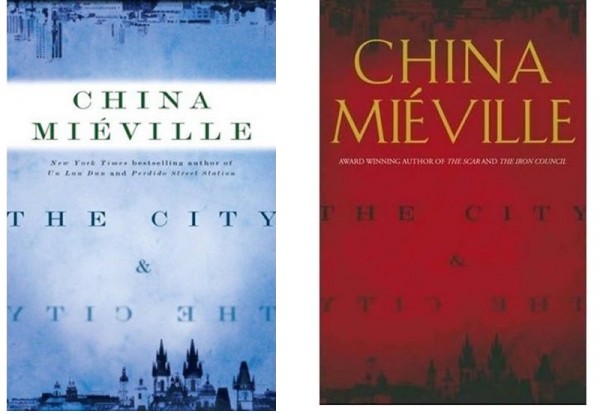
When we came across the theme of China Mievelle’s  wonderfully wierd fiction story ‘The City and The City’ (introduced to us by Carol Breckenridge) it lent itself easily to a comprehension of Mumbai’s extreme contrasts. In his novel two cities are enmeshed in each other, but citizens of one are conditioned to ignore the evidences (sometimes staring at them in their face) of the other. The office of the ‘Breach’ ensures that the urban worlds remain parallel (even though enmeshed intricately) and disconnected. When a body from one city is found in the other – the narrative starts to flow and the reader discovers the rules through which people can co-exist and remain disconnected.

For anyone in Mumbai who has rolled up a window in an air-conditioned car – in the face of a highly professionalized beggar economy, or walked over a sleeping homeless body, or appreciated the new arty graffiti on a wall once housing streams of homeless families, the novel touches a raw nerve. Reminds you, with the same moral force of your conscientious school teacher – that there is a world out there, which you see and need to respond to in a manner beyond glazed eyes. And yet that would be a ridiculously simple allegorical connection to make with the book. Thankfully our comparison is not moralistic nor intended to create victim – based hysteria. There always are deeper reasons behind the resignation to accept contrasts, particularly when they are so obvious.

But what Mievelle’s world conjures is the ability to see how deeply etched are the invisible worlds that exist around us in many scenarios. It is an ideologically divided Europe that is the inspiring context of his novel. It can work in several ways. Reminding us that there are schisms in several cities – energetically cosmopolitan New York, aggressively regenerating Moscow, ethnically complexed Paris, or migrant enriched London. Its possible for the office of the Breach to operate in all kinds of ways. Its possible for us to be oblivious of the obvious in more ways than simply not seeing the faultlines that are all too evident. Its about finding out where the faultlines actually are. And they may not at all be where you look for them.

Mumbai: A Port City?

January 15, 2010


Ferry Wharf, Or the Brother’s Push (Bhau-Cha-Dhakka), Mumbai

Some years ago, the idea of the Eastern Waterfront was thrown into the public realm by several planning and design centres to show that much more can be done to explore the city’s island status and its vast shoreline on both its sides. Right now, the Marine Drive, Priyadarshini Park, small stretches up to Bandra, Andheri and beyond legitimately demonstrate what the western waterfront has offer to the public of Mumbai.

On the east you have Colaba, Mazagaon, parts of Sewri and then the vast saltpans that are relatively open. Most of the eastern waterfront is controlled by the Mumbai Port Trust – an entity that officially handles a huge amount of cargo – most of which is consumed by the city itself. It offers employment to several thousand people with many more being dependent on it directly and indirectly.

According to the port authority representatives it is difficult to evaluate the eastern and western waterfronts’ contribution to the city only in terms of open spaces. The fact that it is an economic engine cannot be discounted. It points out that many spaces which are restricted to the public are done so by the defence authorities. In many cases it has opened up public gardens and provided access to people to visit historical structures even though large parts of the front is in poor condition in terms of infrastructural facilities.

However many of them feel that in the name of opening the waterfront to the city at large – the real estate lobby can simply take over pockets of the land and still keep the place inaccessible to the not so privileged public. Citing the case of the mill lands and the way the state government ultimately gave in to the building lobby they feel there is no guarantee the same may not happen here.

The opponents are not fully convinced. They feel a lot more can be done in terms of rationalizing the use of surplus land that the port authorities have control over, now that many lease terms are coming to an end. Many feel that there is no place for a port in a modern cities and give examples from all around the world. This is countered by the fact that the Mumbai port trust is actually in a state of expansion and a phase of economic growth. There are also newer streams of thinking in which city ports have adapted to their urban status and turn their location to an advantage.

All in all we have a situation in which the city seems to be very divided and in which debates tend to get heated and passionate. Personally we have witnessed several situations in which good intentions have been overridden by commercial interests and so one has to be doubly cautious of tall claims. At the same time to have an economically dynamic functioning port is vital for the economy of a city – especially if it can also develop a powerful relationship with the city by helping through transport issues and opening up parts of its waterfront for the public at large.

These issues are currently being explored by a joint Eastern Waterfront studio by the Urban Design Program and the Earth Institute at Columbia University, together with the JJ School of Architecture and the School of Habitat Studies at TISS. Mumbai’s historical relationship with the sea and its trading networks, the question of land availability, as well as environmental concerns about rising sea levels and mangrove preservation are likely to spark much more passionate debate and ideas in the years to come.

Aerial Roots: Geddes and Tagore

January 14, 2010

gedd_tagore2

At the moment we are reading this inspiring text. Tagore is a legendary figure within the Indian intellectual, literary and public realms – as legendary as Gandhi and therefore almost as taken-for-granted and relegated into picture frames. As a poet, he was India’s earliest Noble laureate and invested substantially in the vision of Shanti Niketan, a special space of learning, about a hundred and fifty odd kilometers from Calcutta, which combined the magic of forests with intense urbane, cultural and learning experiences. Patrick Geddes is a more than special name in the world of urban practice – providing inspiring ideas on cities, regions and connections between the environment and habitats. He lived for several years in Mumbai and established the department of Sociology and Civics at the Bombay University in the late nineteenth century, besides doing planning surveys in several Indian cities. The fact that the two met a few times and had a great correspondence on issues linked to cities, forests, rural lives, and cultural practices, around the early twentieth century, fires our imagination. A detailed review to be posted very soon here…

Rabindranath Tagore and Patrick Geddes, the Correspondence
Visva-Bharati Press (India) and Edinburgh University Press (Scotland)
ISBN – 1-85933-203-X

Prawn Nagar – Dharavi, Mumbai

December 30, 2009


Softer landing for District 9’s Prawns in Dharavi

If the aliens hadn’t found their way to District 9 in Johannesburg but turned a few latitudes east, across the Indian ocean, over a tiny sliver of land jutting out obscenely and defiantly off the v-shaped south-Asian sub-continent, their fate in cinematic history would have been something else.

Imagine the spaceship hanging over the hot and humid city of Mumbai, specifically over its most mythified neighbourhood – Dharavi.

Its enterprising residents would have absorbed the presence of the craft and its seafood resembling occupants with relative ease. The metallic tentacles of Dharavi’s legendary recycling industry, would have eventually penetrated the most sophisticated barriers and shields to slowly and steadily dismantle the alien structure for absorption into a million-dollar industry that does not allow even the most ordinary piece of scrap to go unsold. How could tons of exotic metal be left to hang in mid-air? Notwithstanding any degree of technological superiority…Bits and pieces of the metal would have found their way into spare body-parts of second-hand cars, ships, toys and assorted machinery. The unusable celestial leftovers may be left to hang in space with no one caring much for aesthetics. Instead somebody would start a little sight-seeing tour by making an improvised crane-bridge to take curious onlookers and tourists for a closer look.

And what of the aliens themselves?

They would have managed to build a tiny little habitat between the crevices of the impossibly dense habitat. Maybe on the toxic watery edge of the mangroves. Not having access to tinned cat-food in Dharavi, could well have found the fish in the sewage water a worthy substitute, considering that a few older residents still fish there even now. And they would have found something worthwhile to do for sure. Their presence would have inevitably fired several wild allegations.


Prawns are said to be hiding in the Mahim Creek near Dharavi

Economically they could make leather goods in Dharavi even more globally competitive with a dash of their own technology. Of course, this could mean a legal crackdown – since scientific tests about the safety quotient of alien substance aren’t possible. But Dharavi’s grey zone economy would take care of that and eventually the aliens would become integral to the neighbourhood’s oldest and most prosperous economic activity, getting swallowed into its several residential, community based enclaves, taking the disputed figure of eighty –eight nagars to eighty nine.

It would have been difficult for any curious journalist to actually discover Prawn-nagar as the boundaries between enclaves are not easy to discern. The only way she would know she’s arrived would be on seeing a bunch of young prawns playing cricket with local Dharavi boys. They would point her out to a set of structures around a small clearing where a few adults would be having a heated argument with neighbours over the right to build a shrine in memory of their lost home – in the form of a replica of their ship.
The shrine would be the only way to connect to their past. No chance of returning home now – given the remains of their emaciated, skeletal, once proud extra-terrestrial space vessel. The other reason nobody would want to return is because the cost of homes in Dharavi would have increased four-fold by now.

Typically, the temptation of making more money eternally overrides any possibility of return.

The journalist would most likely be reporting the possibility of a riot because a prawn-girl and a local – earthling boy had fallen in love and were nearly lynched by both communities, only to be contained by an elderly local activist trying to broker peace.

The prawns would soon be part of political demonstrations trying to save Dharavi and a politician would eventually have got them voting rights. Against the will of a local right-wing party which tried hard to fight their presence tooth and nail – equating the aliens with worse – those from the states of UP and Bihar.

Sooner or later though, a clever prawn leader would have won over the local right wing forces by declaring Marathi as their earth-tongue. He would then have proceeded to pledge support to their drive against the real aliens – the hapless migrants of U.P. and Bihar.

That would pretty much have been the story.

Look out for regular updates from Prawn-nagar, Dharavi, Mumbai on airoots…

Kolhapur Photo Diary

December 28, 2009

Kolhapur is a small town in the south-west region of the state of Maharashtra, not more than four hours drive from Goa. It is part of a district with the same name, on the prosperous sugar-cane growing belt which makes the rural areas relatively more prosperous than the town itself. Kolhapur is known for several artisanal goods such as leather slippers, pots (there is a local Kumbharwada, potters colony right in its inner city area) and once even had a bustling movie industry (around the early and mid-twentieth century), besides being a well known patron for classical music. It fascinates us not as a town alone, but as an urban system that includes a well-off country side and some distinctive architecture thanks to its princely lineage, ruled as it was by a king until the Indian independence. But most significantly of all, a group of enthusiasts who love their little part of the world. We found an architect who conducts studios with international students along with doing his practice, a high level of civic pride with the presence of several action groups including ‘Kolhapur Calling’ and several young people trained in Kolhapur’s well known educational center – Shivaji University – and its college of architecture D.Y. Patil.

Local Architectural Flourishes

Local Architectural Flourishes

The ubiquitous black stone frequently used in coastal Maharashtra

The ubiquitous black stone frequently used in coastal Maharashtra

4166885609_20a36ff776

Lost Lady

Lost Lady

On the fringes, but in the urban system? Dhangar Nomadic Shephards

On the fringes, but in the urban system? Dhangar Nomadic Shepards

Brick Kilns - made right outside the city

Brick Kilns - made right outside the city

Digital Bungalows: Thats what the poster says!

Digital Bungalows: Thats what the poster says!

One Worker, Many Faces

September 22, 2009

Metalworkers, Dharavi
Dharavi: Informal Economy, Industrial Work

Our perspective on Mumbai is informed by the historical role that the city’s informal sector played when the decline of the textile mills started from the 1980s onwards. That was when some activities of the industry got decentralized and dispersed in several poor neighbourhoods all over and around Mumbai. Notably the ‘loom town’ of Bhiwandi in Thane District. Several other of Mumbai’s informal settlements absorbed processes of the industry – especially stitching and production of clothes.

It is well known that Dharavi has been a traditional manufacturing base for leather goods, pottery and food processing. But it also housed a local service sector that grew around its own vicinity. Besides, it provided subsidised housing for hawkers and poor retailers servicing large parts of the city. The tool-house typology that we talk about essentially looks at Dharavi as a composite of residential, manufacturing and retail activities as expressed in its built-forms.

This composite economic framework works equally well when seen in the context of Mumbai as a whole. The city grew around the docks – a service sector – in the 18th and 19th centuries and that sector continued to hold its own all through the 20th century – even when manufacturing was at its heyday.

It must specially be noted that industrial manufacturing in India was a complicated affair given that it was yoked to a colonial economy and accompanied a forceful displacement of artisanal production practices. In fact the mass migration of artisanal communities to cities such as Mumbai saw the emergence of neighbourhoods such as Dharavi – primarily through the experience of the leather workers and potters.

It is true that along with the gradual disappearance of gigantic 19th century industrial production complexes, the city witnessed the vanishing of a hundred year old evolving history of dignified labour practices. However, some would say the whole experience was unsustainable and so the dissolution was to be expected – especially when seen in the light of the larger role of industrial manufacture vis-a-vis traditional modes of manufacture.

Neighbourhoods like Dharavi lived parrallel lives to industrial sectors in Mumbai from the 1930s to the 80s – testifying to the fact that while manufacture was central to Mumbai’s history, so was the composite – service-artisanal manufacture economy of Dharavi. When formal industrial manufacture declined, Dharavi absorbed and subsidized the processes within its fabric.

We see Dharavi and other spaces in Mumbai as those which encompass a range of different co-dependent economic activities – manufacture, retail, services and others (in the case of Dharavi Koliwada, even fishing right until the 1990s)! We certainly dont see manufacture as ever having left Mumbai. And we dont see it as ever being the sole economic factor in the city’s history either.

Post the publications of Cambridge historian Raj Chandavarkar’s two classics, ‘The Origins of Industrial capitalism in India – Business Strategies and the Working Classes in Bombay – 1900 – 1940’ (1994) and – ‘Imperial Power and Popular Politics in India’ (1850 – 1950) (1998), there has been very little scholarly study on Mumbai’s economic life.

Given the city’s socialist intellectual moorings (hard to imagine today that it even existed!), most of the scholarship has been split between straightforward studies of financial practices, some very good analysis of the city’s informal economy, a lament on the decline of the organized manufacturing sector and wistful goodbyes to the golden history of industrial rule of the twentieth century.

For most of its life, the production of wealth has never been Mumbai’s problem. The fact that it does not seem to translate into the city’s lived experience has been the real issue. Even when the city’s textile mills thundered in full bloom, when the docks were stretched to their full capacity and the middle-classes commuted to banks, colleges and offices in neatly ironed clothes in not-so-crowded BEST buses and local trains, the quality of life for workers was not at its best. Chawls and tenements were made livable because of the enthusiastic and robust cultural resources that communities themselves bought to the city from their rural homes. It was certainly not because their unions always succeeded in having their demands met. Only because we constantly compared city lives to what was left behind (which was often worse in terms of social and cultural status) that the city felt it was providing a better deal to its working classes.

It is that very resource – working hard for very little thanks to the cultural and community support of migrants that made Mumbai’s poorer neighbourhoods what they are today. Far from being cesspools of crime and decay, they produced schools within a generation of taking roots and participated wholesomely in the city’s economic aspirations, besides rising to the occasion in terms of fulfilling the city’s economic needs of production and subsidized retail.

When the grand industrial mills were killed by real-estate greed, these marginal neighbourhoods – from Bhiwandi in Thane to Dharavi, from the streets and gullies in Mohammedali Road to the tenements and habitats that mushroomed around manufacturing units in Kandivli and Vikhroli, continued to subsidize the city through hard work and community back-up.

The reason why we don’t use the appellation ‘worker’ to the millions of the city’s daily wage earners who don’t work in the formal sector is because in the history of modern cities, organized manufacture has a special status – especially since it is linked to the progressive practices of labour reform.

However, for a city like Mumbai that does not take us very far. All through its history, the docks, the services of finance, industrial manufacture, neighbourhood retail, consumption, street hawking, artisanal production (especially leather and pottery) and even fishing jostled for space and attention. There was no evolutionary peak in terms of industrial manufacture and a revolutionary organization of its workforce (which by all accounts was a caste-complicated affair).

As we become more and more aware of the city’s multi-dimensional economic history, we acutely start to feel the need of a vision that rewards the most basic and unself-conscious worker who makes the city tick with hard labour and community support – even if she does not have the legacy of organized industrial history behind her.

It’s only when we do that, and allow them to live with dignity in habitats of their choice, can we hope to create an urban future that is closer to a world of lived equality rather than one that is enshrined in slogans and posters.

Next Page »