
A Route to Abyssinia
August 28, 2008

The spectacular Janjira fort, a chip of India’s African history, stands in the Arabian Sea, a few kilometers below Mumbai. It is literally referred to as the Island Fort. Covered with trees and roots, it is tall and majestic – proud of the fact that it remained the only unconquered fort in the region.

Unconquered, by the several rival rulers who cast covetous eyes on its strategic position.
It is a beautiful urban ruin. Overgrown with trees that have roots going all the way to Africa. A place that is physically surprisingly close, but has been made distant through forgetfulness and a lack of perspective.
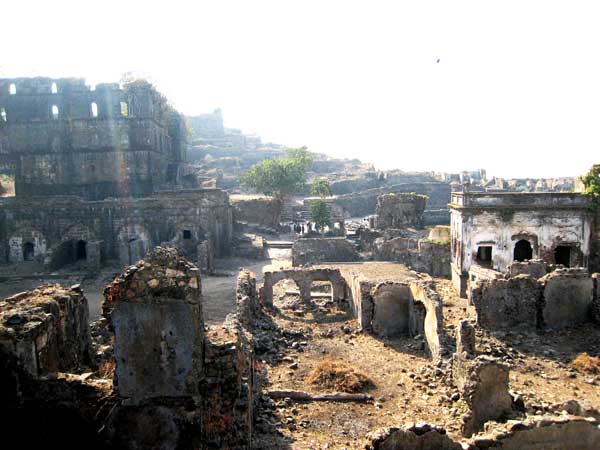
Its airoots thrive in open air, sniffing for a whiff of the past.


They remember the days when it was a compact city full of the several industries that armies generate, industries that brought in families and made communities. The 22 acres of black stonewalls are littered with cave-like rooms and shelters, water bodies and the remains of a mosque. They are lined with heavy iron cannons and elegantly designed archways that look like framed pictures of the sea and the coast. The island fort was once full of urban intensity. It belonged to a liminal world in between continents and was multi racial and cosmopolitan.

The sea links between Africa and India have been alive and kicking for a thousand years. There was trade, trafficking, wars, and this African kingdom that ruled parts of western India for a few hundred years. A kingdom that ruled through the seas, from coast to coast, harnessing the energy of a thousand exchanges, of goods, services, ideas, cultural artifacts, music, flora, fauna, and people. The Siddhis, descendents of this African legacy on the Konkan, still live along the coast from Gujarat to Karnataka speaking local languages, living as an indigenous people with a vague memory of an African origin. Like the Bene Israel – an ancient Jewish community who lived on the same coast, riding the same historical wave and getting absorbed as a local caste – the Siddhis too bring to surface their African past only when history makes it come willfully alive.

The small coastal towns of this old globally cosmopolitan belt have homes that reflect its hybrid architectural legacy. Structures that could have existed on the eastern African coast, for all practical purposes.
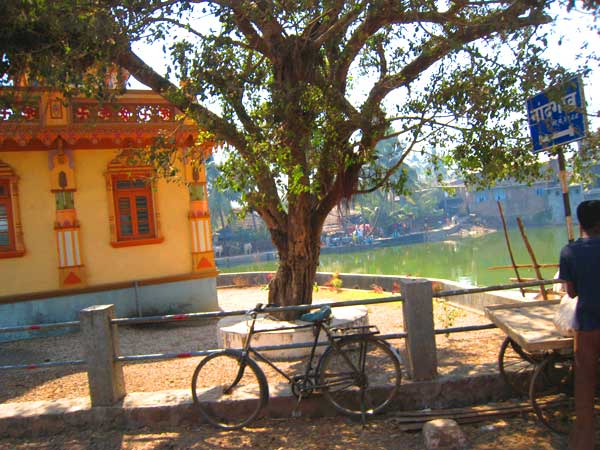


An old customs house, a colonial leftover of the millennial old trade practices still stands in Murud. It was responsible for transforming the ancient sea-exchanges from traditional trading activities into an underground smuggling network. Like many colonial judgments – this too became a self-fulfilling prophecy of sorts – or at least kept alive prejudices and suspicions.
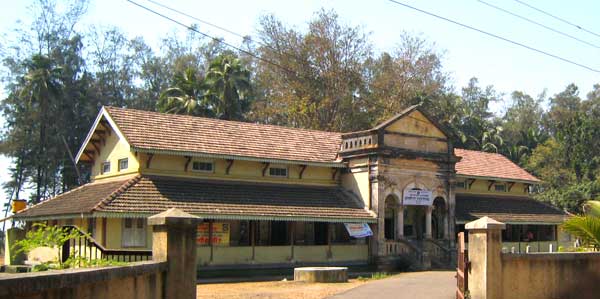
At the northern edge of Murud is an ornamental palace – private property of the descendent of the Abyssinian King. Referred to as Nawab Khan, the royal man, often comes here, when he is not with his family in Bombay or visiting another palace of his in Indore – Madhya Pradesh. He graciously meets visitors on prior appointment.

Africa for Nawab Khan is a hazy memory. Today, home is where history and destiny have bought him.

Wonderfull website. Great pictures and contemplative narrative. The site does remind me of the Swahili ruins in Eastern Africa.
Comment by Clifford Pereira — September 1, 2008 @ 8:17 pm
Thanks Clifford. Could you send some images of these ruins to us? Thanks!
Comment by Airoots — September 2, 2008 @ 8:27 am