
Urban Species
November 10, 2008
Urbspotting: Recognizing urban processes and formations. Archetypes are as much about the gaze of the observer as they are about real patterns and formations. Discerning them is often useful to crack open the calcified, hardened conceptual crust that has formed on the idea of the city. A crust so tough that it pretends to act as a foundational principle for all urban possibilities, when in fact it is one among many. We welcome additions to the ones suggested here!
The Bazaar: Temporary P2P exchange zones. The bazaar could well be the genesis of all urban forms. Stable cities have mostly been sparked off by simple acts of trading and many cities today are sustained by markets that sprout in all kinds of places. The bustle of a bazaar often suggests that its not just trading that goes on there. They indicate that exchanges of all kinds – even when not linked to livelihoods or profit – are life-sustaining and desperately needed. Thats why they can also be referred to as P2P zones.
Ex: Ingo’s Flea Market, Goa; Everywhere in Mumbai

The Bazaar, Tepito Market, Mexico City
Bobo Town: When artists, gay communities and students discover fringe areas of the city and transform them into trendy comfort zones. Exuberance, creativity and rebellion go hand in hand and neighbourhoods get transformed by acts of defiance that such groups spontaneously exude. These moments of lifestyle critiques make great exorcists of dullness and boredom that often lie over streets like heavy fog.
Ex: Williamsburg, Brooklyn; East Village, Manhattan
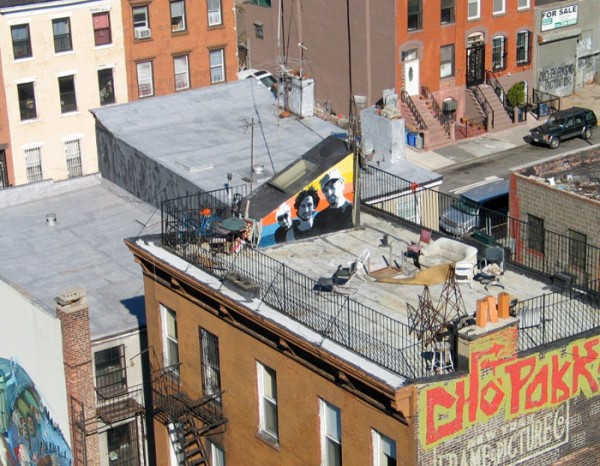
Bobo Town in Williamsburg, Brooklyn, New York
The Hamlet: Anachronistic urban villages that have a distinct identity and manage to survive in a large megalopolis. They keep reminding vertically obsessed cities that habitats come in all kinds of shapes and sizes. Low rise high density clusters can be as urbane as any contemporary piece of architecture and can have their own legitimate place in urban lives.
Ex: Khotachiwadi and Koliwada, Mumbai
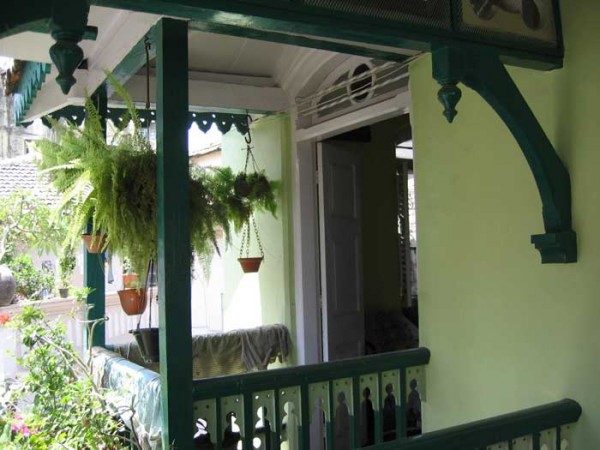
The Hamlet in Khotachiwadi, Girgaum, Mumbai
Post-Industrial Site: That reflects a different economic era, typically industrial, which today is a ruin, but still full of potential. The post-industrial site reminds you of the cyclical nature of economic activities and of the rise and fall of neighbourhoods. However, even in its ruin it is inevitably pregnant with possibilities, since the urban imagination has the ability of absorbing even the most decayed of landscapes and converting them into vibrant zones, with a sleight of hand and a touch of trickery.
Ex: Tada Site, Taichung (Taiwan); Cockatoo Island, Sydney; La Escocesa, Poble Nou, Barcelona

La Escocesa, Post-industrial site in Barcelona
Creeper Street: Informal arrangements supporting the formal economy, which can be found in the back alleys of every central business district and generally all over the city. The Wall street is as much about invisible financial transactions as it is about the thriving food and hands-on service industries that surround it. Creeper streets abound in a city like Mumbai which pretends they are ‘informal’ when in fact they comprise the main activities of the urban economy.
Ex: Print shops and services in Wall Street, New York; Recycling shops in Dharavi, Mumbai
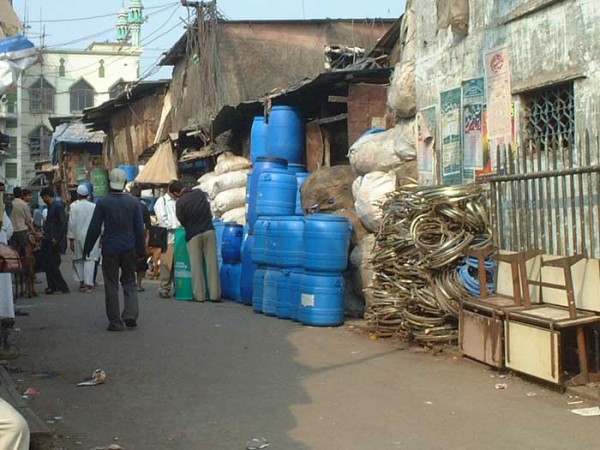
Creeper Street in Dharavi’s 13 Compound, Mumbai
Disney Street: A selfconscious historical quarter that builds on its own mythology almost to caricatural extremes, usually living off the tourist economy. They are different from Bobo streets since they depend on one narrative, set of myths or the life of a celebrity. They are quaint side shows to the urban story but have the potential of sustaining quite a few generations of small scale services and businesses.
Ex: Barri Gòtic, Barcelona; Pigalle, Paris; Abbey Road, London

Disney Street in the Gothic neighborhoud in Barcelona
Takeover Street: Enclaves where squatters save neighbourhoods by a creative reuse of space. Today, many of them are an endangered species. Yet the history of squatting in Europe has been nothing but a chronicle of the best possible examples of the re-use of urban space. It has been a testimony to the creativity of ordinary people and an expose of the fact that there is a whole universe between the surplus of space and its commercially induced scarcity.
Ex: Artamis Site, Geneva (RIP); Christiania, Copenhagen (RIP)
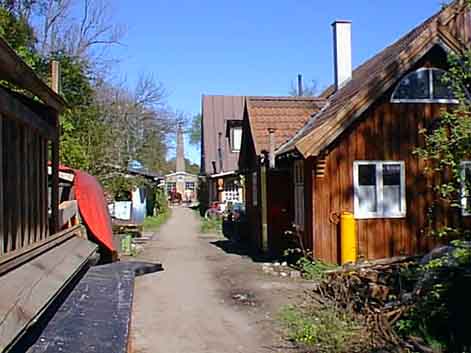
Takeover Street, Christiana, Copenhagen
Transglobal Localities: Havens for passerbys, travellers and tourists. The weather is often one of the most over looked causes of new urban formations, yet people travel all across the world in quest of the perfect temperature. Organized tourism and travel may have stripped a bit off the romance of exploration and geographical discovery but it has spawned unexpected moments of urbanism in the most unlikeliest of corners.
Ex: Calangute-Baga, Goa
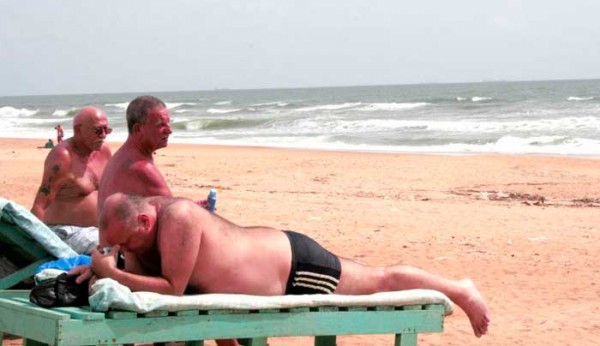
Transglobal locality, Near Titos, Calangute-Baga Beachfront, Goa (Photo image ination)
Ethnie City: Community based enclaves. They are legacies of insecure social histories on one hand and positive statements about the comforts of familiarity on the other. In most cases they are simply what they are. And are as willing to become something else. Yet – the symbols they have generated mark the diversity of urban life in a manner that is so important for celebrating cosmopolitanism. Typically paradoxical of modern life.
Ex: Lee Street, Williamsburg, Brooklyn (Hasidic Jews); Koliwada, Dharavi, Mumbai, (Fisherfolk); The Castro, San Francisco, California, (Gay)
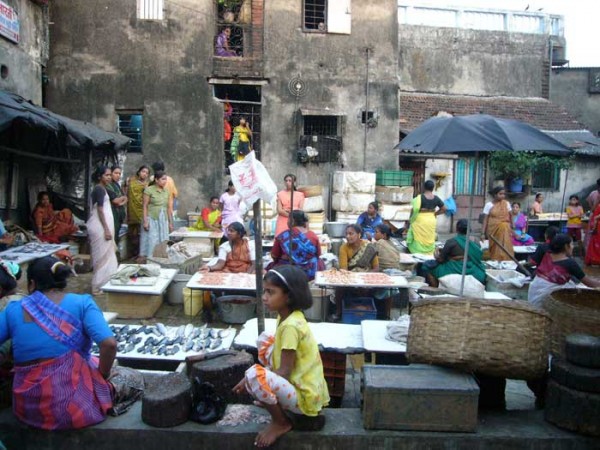
Ethnie City: Fish market in Koliwada, Dharavi, Mumbai
Ura Machi (Shadow City): Blindspots in the psycho-geographies of contemporary cities. Every city has them. To those outside their boundaries they are embarrassments, but to those who dwell within them they are repositories of valid urban histories, however awkward or distinctive. Yet – blindspots can suddenly find themselves in the harsh spotlights of commercial attention if they come in the way.
Ex: East New York, Brooklyn; Dharavi, Mumbai; San’ya, Taito Ward, Tokyo
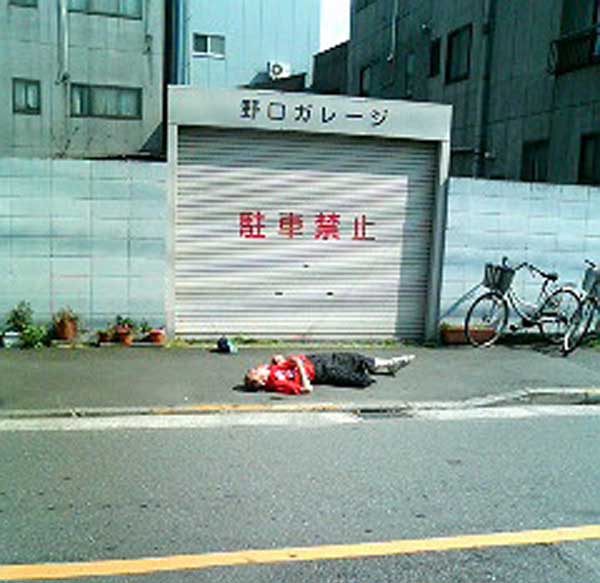
Ura Machi, San’ya Buraku, Taito Ward, Tokyo (photo crowndedworld.com)
Lost Street: That which is part of a historical moment forgotten altogether.
Ex: ? You just have to visit the least travelled to spot in a city, take a train or subway that runs empty or get off that deserted stop and you will re-discover it.

Lost street somewhere around Mira Road, Mumbai
Edge Street: That which lies at the boundary in more than one sense of the term. There are edges and fringes and peripheries and then there are spaces that are outlawed, self-governed or simply no-mans-land squeezed in between administrative boundaries. They can spawn some amazing counter-cultural moments or are best left in a hurry.
Ex: Ghodbundar Road, Thane; Coney Island and East New York, Brooklyn, New York

Edge Street, in East New York, Brooklyn, New York
The Carnaval: Occasional, popular, celeberatory takeovers of neighbourhoods and streets. Noise, music, lights and colour are the hallmarks of moments when communities and people decide to leave their mark on the collective consciousness of the city. Its showbiz of another kind and equally seductive. Its a way of leaving your collective scent on the street before the authorities forget you altogether. The ritual or festival is just an excuse.
Ex: Notting Hill Carnival, London; Ganesh Chaturthi Celebrations, Mumbai; Salvadore de Bahia Carnaval, Brazil

The Carnaval, Salvador de Bahia (Brazil)