
Artist Village in Mumbabylon
September 4, 2008
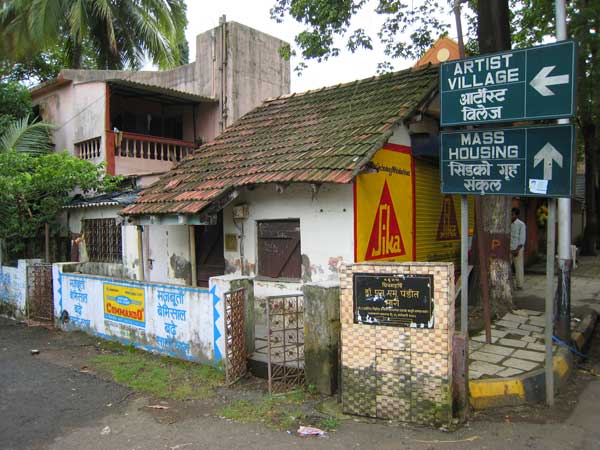
Charles Correa is one of the most influential Indian architects around. He has been building extensively in India and abroad, but along with his designs it is his thought process that made an impact. He was a strong advocate for the development of New Bombay (Navi Mumbai) as a twin city to Mumbai, that would decongest the city (or at least absorb some of the inflow of immigrants pouring in from rural areas to the financial capital of India). He actually acted as Chief Architect for the planning of the new city. However, he himself would agree that, eventually, the city’s growth didn’t quite go as planned. An educated guess is: big money and unscrupulous/corrupted public officials messed up what was originally a good plan.
We know Charles Correa cannot be held responsible because in one part of the new city, he showed what he was really up to. This is the ‘Artist Village’, a 55 hectare mixed-income housing project in Belapur, New Bombay. The neighbourhood immediately transported us to a Goan atmosphere, indicating his roots on the Konkan. It was almost as if he saw the twin city as a gateway to the coast, all the way down to his native state.
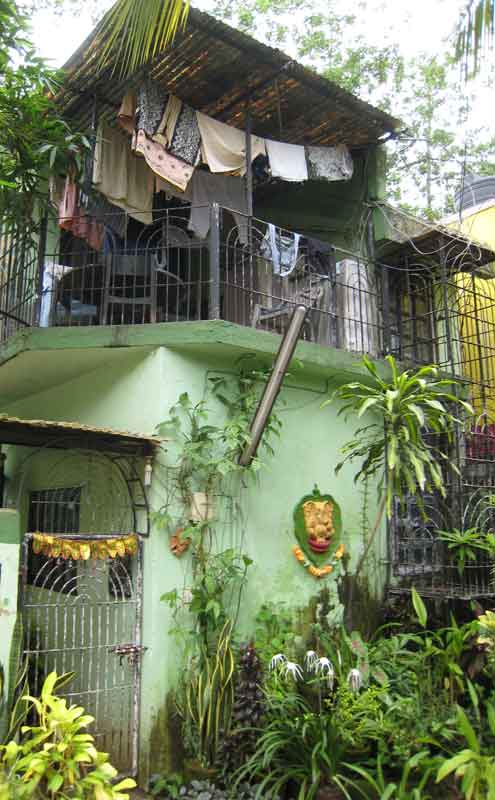
The village has a high concentration of artists. The first residents had to be artists of some sort to move in. Naturally things have changed a lot since it was built, about 20 years ago.
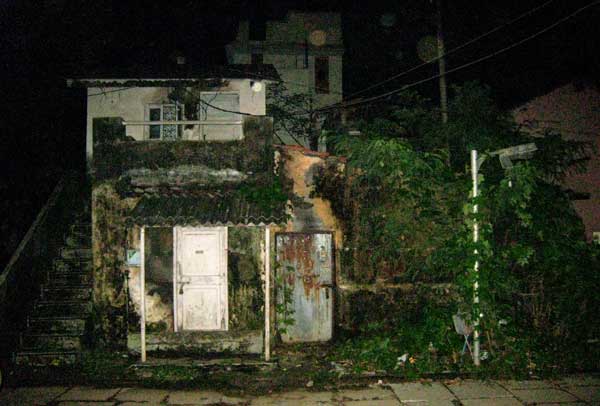
It is really worth a visit. Go to see what a genius urban designer can do when he thinks beyond design. It is very fashionable amongst architects to despise each others’ works. Charles Correa’s ‘Artist Village’ in New Bombay has not been spared by criticism from fellow architects.

True, not much remains of the houses he designed. Most have been remodeled or destroyed and rebuilt. Some inhabitants said they were impractical (â€What was the architect thinking when he put toilets outside the house?â€). Some clusters of houses became “model†mini-gated-communities while others became mini-slums.

But this is precisely the genius of the project. It was produced with the idea that the residents were going to alter it in many ways, making it truly their own.

One resident we talked to complained that no provisions were made for the common spaces in the center of each cluster of houses. No one was in charge of maintaining them. These spaces do not fall under any jurisdiction; not private nor public.

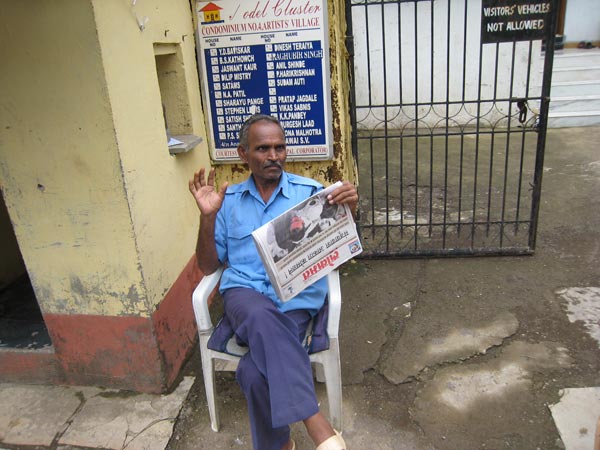
This resident had to take it in his own hands and talked to his neighbors and they worked out a solution. They each contributed to a common fund that started being used for maintenance. There is even extra money left to pay a retired army man to spend his days sitting on a chair in front of the gate they built, to prevent strangers from entering the cluster (we got through though!)
In other clusters we saw residents wiping out the ground in front of their house. This was part of the plan. The architect even foresaw the dispute between neighbors which is part of the pluralistic and messy process of creating a community.
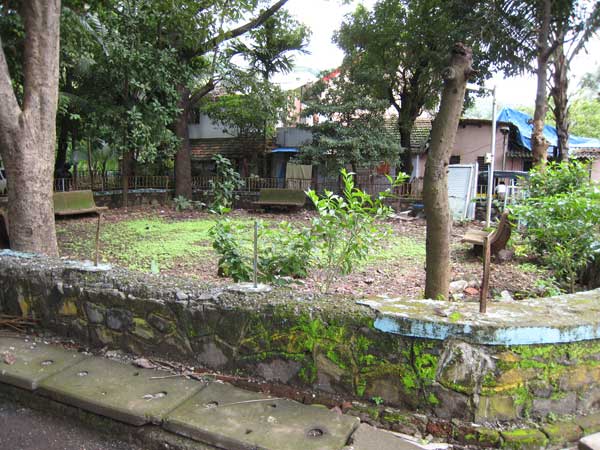
What really struck us as we walked through the Artist Village, was how organic it really looked. It was designed, yes – but it managed to be a natural city. Before we saw the project we had almost lost faith in urban design altogether, thinking that it was irremediably oppressive, determining in advance how people are to go about their lives, enclosing them into a limiting format.

The first reason why the Artist Village looks organic is that it allowed people to modify their houses freely, whether with a paintbrush or a mortar. Something that is NEVER allowed in the type of mass housing devastating the urban and psychological landscape of cities around the world.

The second reason, we have to say, is Correa’s deep understanding of the nature of cities. His cluster modules are very simple, yet they are related to each other in a complex way.

This housing project offers the quality of life of a village with the sophistication of a city. Each cluster permits the emergence of a hyperlocal community feeling, while integrating each house to the whole settlement at different levels. The hierarchy itself is very organic, as the diagrams below show (from Charles Correa 1989, The New Landscape).
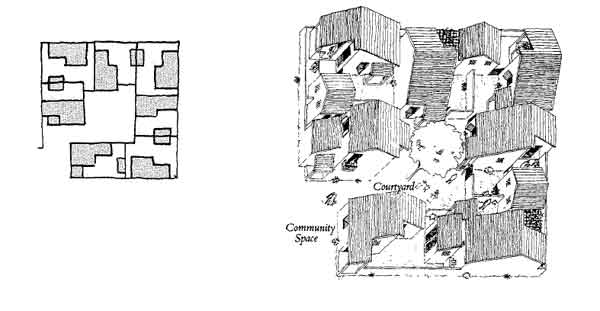
Cluster of 7 houses

Cluster of 3 x 7 houses
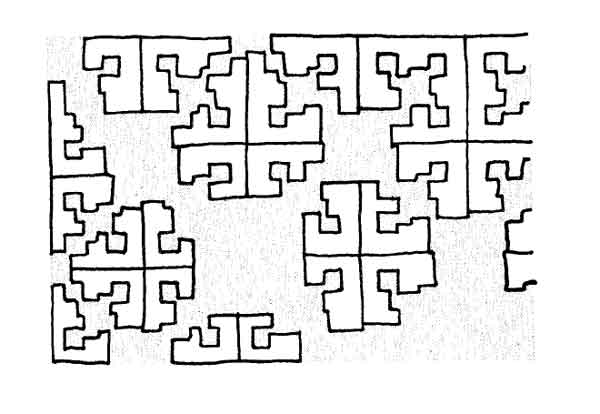
Clusters of 3 x 3 x 7 houses
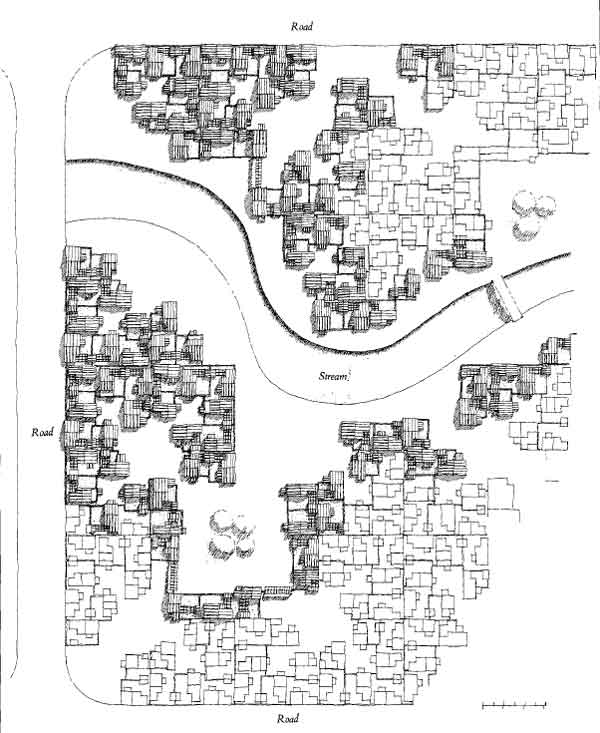
Mapping of the village
It is great to see that the best is possible. There is a middle-way between Dharavi and Brasilia and Charles Correa points clearly to it. Thank you Charles! A deep bow from the airoots team.
I think that this project is great and can be compared to the Hassan Fathy’s project for New Gourna. Both are about inspiration in vernacular architecture of their countries to create something truly participative.
Thanks for the information!
Comment by Omayra — December 2, 2008 @ 7:38 pm
well you have shown a great approach towards the core of its design and its great that you share your knowledge to others…. a great bunch of knowledge sharing…!
Comment by khushboo — January 5, 2010 @ 10:15 am
I am h.k.baro mfa (painting) from delhi art college 2000. I am interested to visit ur artist villege same time.
Comment by HARAKANTA BARO — June 3, 2010 @ 8:59 am
This artist village is scary! Instead of projecting creative aspirations, it projects decay and ugliness. Truly it is a reflection of contemporary Indian mind. Architecture is a social art… it needs inputs from society in terms of society’s mindset, society’s technical development, awareness and aspirations! Architecture no matter how good on paper, when actually manifested as a built form shows where the society stands in its development. In India most planning schemes are bound to fail unless there is awareness amongst people. There will never be improvement in the built form, if the deep rooted issues of the indian mindset in terms of ‘beauty’, ‘civic responsibility’ are not addressed.
Charles Correa as an architect is good, but the process through which has to work in India is outdated, fragmented and Ugly. I see no hope whatsoever for the Indians under these circumstances!
Comment by Tushar Koli — June 13, 2010 @ 7:25 am
I am a 3rd yr student,this sem my project is housing n i had to case study belapur housing its was interesting in d books but in reality it lot has happend,thanx a lot for this pictures looking forward to going there soon
Comment by alisha — July 17, 2010 @ 6:27 pm
I m final year architecture student and must say in this project Ar.Correa has really given a thought in accordance to people living there and also to nature.I m doing my thesis on artist village which includes there workshops, exhibitions and also there residents, so was really looking forward to visit this place……
Comment by Divya Batra — October 21, 2010 @ 6:42 pm
hey ,
Thanks for the drawings . They are really informative.
Being a resident of artist village and being a 2nd year student of architecture ,I think ITS A GREAT PLACE TO LIVE.
How many people get to enjoy mangoes from the mango tree in your courtyard or run for it when you hear it falling from the tree. The way Mr.Correa integrates the outside with the inside is really commendable.
Those who criticize it for its functionality and its poor services ,must know that it was designed for artists and works beautifully as a mini- studio. I have too many memories that I can share having been a resident of artist village for 19 years.
Comment by aditi — March 14, 2011 @ 12:05 pm
I completely agree with Tushar and partly with Aditi. I too have been lining in Artists’ Village for more than 17 years now and though I agree with most of Aditi’s experiences, living here has been by and large a very painful thing. What I’ve realised is that there has been a chaotic confusion of concepts among the architect, the developers (CIDCO) and people who are residing here. That is why you hardly can find any of the original structures still standing here. Its true that this was designed as mini studios. But, then it was marketed as an artistic housing complex and people who started staying here for the love of nature, were cheated by the authorities by allowing growth of concrete jungle all around the village.
Comment by Abhijit — May 7, 2011 @ 3:52 am