
Image of the City
May 31, 2008
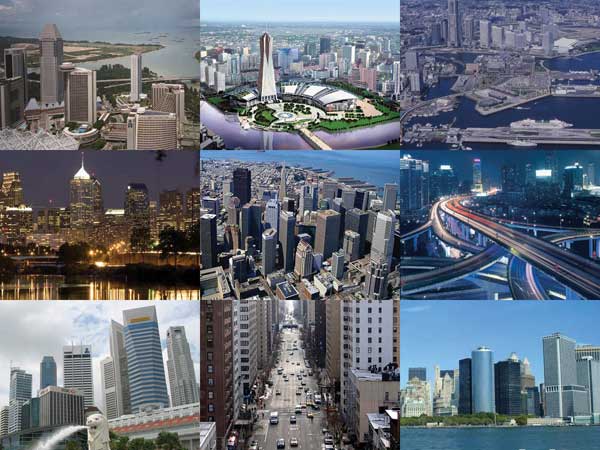
Having said all that about technology – it would do well to remind ourselves that the concept of technology itself has been cracked open. It is not just about the nuts and bolts of human intervention and control but is embedded in images and desires and shaped by specific arrangements of resources, knowledge and power. Often the idea of technology is used to convey something neutral- as if it is essentially part of the hardware universe – when it is in fact propelled as much by image and fantasies as it is shaped by them.
Do a google image search for “city” in English, Japanese, Chinese and you will get different versions of the same high-rise, “modern”, “world-class” city that could be New York, Singapore, Shanghai, or any new Chinese town. Even cities that are actually totally different from that generic image seem unable to imagine their urban future differently. In fact, Mumbai appears to be locked up in that generic city imaginary to the point that it is unable to recognize the unique version of modernity that it has produced. The large parts of the city that do not comply with that generic “modern city” image are seen as being “historical” at best, and at worst “backward”. No space is left in the collective imagination for a modernity that would not be high-rise and car centric, but would instead steam from the current reality of the city. The gap between the reality of a city where 60% of the population live in low-rise informal habitats characterised by dense community networks and home-based economic activity, and a Manhattanesque vision of the future produces all kinds of urban tensions and counter-productive redevelopment plans, that are typified by the McKinsey “World City” vision for Mumbai.
What makes this image so powerful is its ability to convey its connections to universal, contemporary and futuristic worlds.
The interplay of technology, aspiration, fantasies and images continues.