
The Sao Paulo Urban Revolution
March 20, 2012
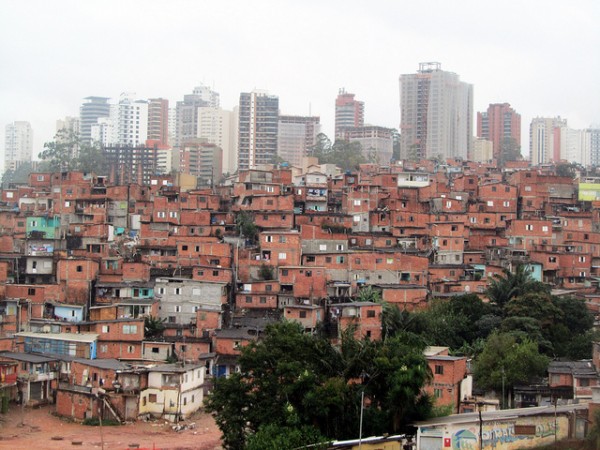 One City, Many Forms
For a city as high on modern architecture as Sao Paulo, its newly found generosity of spirit towards its contrasting favela-studded landscape is a precious thing. The administration seems to be more accepting of the city’s diverse urban texture than ever before. It is now loosening policies to allow existing favelas to upgrade themselves and become well-integrated parts of the city. 

Sao Paulo has experimented with years of diverse approaches to ‘tackle’ these neighbourhoods. These have included encouraging migrants to go ‘back home’ or relocating them in social housing projects.
Today, of its officially estimated three million favela residents, the administration focuses on relocating only those who live in high risk zones. Local actors continue building and improving their houses, while the prefecture retrofits water systems and other civic infrastructure. 

Such a shift may be strategic, shrewd or contingent on electoral cycles. However, in a world with little patience for alternative forms of urban settlement – where everyone is in a hurry to redevelop according to the global standards of the day – such a reprieve is itself revolutionary. Especially when it is combined with the strengthening of local governance and emergent economic practices such as local currencies.
These moves signal a new found faith in the capability of the favelas to reinvent themselves into confident middle-class neighbourhoods. From once signifying a ‘slum’ the word seems to represent a new and assertive urban order that today dominates the globe, showing its civic potential in cities like Sao Paulo and Mumbai. One which – if allowed to – can absorb new infrastructure in a flexible manner, help open up rigid planning rules, energize architectural imagination, encourage healthy economic practices and eventually transform the neighboourhoods into prosperous areas with a high quality of life and a strong sense of identity.
The biggest hurdle Sao Paulo’s nascent ‘urban revolution’ could eventually face may be from an unexpected quarter. We may well discover that mainstream urban practitioners, builders and theorists provide the strongest resistance! After all, what can one make out of the unexpected landscapes? The emergent, messy aesthetic takes some time to enter into our realm of the normative. However, instead of opening up design and architectural theory, and adapting to the change, planners and architects may realize that their traditional moneymaking models of development are threatened by local construction practices. Their response could be about pure, competitive survival. They may insist on broadening the notion of ‘risky’ neighbourhoods to eventually become so wide that the favelas may eventually transform into morose, straight-jacketed social housing projects anyway!
However, this does not have to be so. Favelas have the means and need to engage many kinds of urban practitioners. Working together with local builders and residents on a multitude of smaller projects is likely to be more fulfilling to young architects than helping developers maximize their returns on large real estate projects. And it may well be more remunerative as well in the long run. Architects are most exposed to the booms and burst of a real estate industry, which is more than ever riding on roller coasting financial markets. On the face of it, the construction market in the favela, with its relative autonomy from the debt economy, its thrust for improvement and its openness to new ideas seems like an increasingly sensible field of practice for a new generation of urban practitioners.
Construction professionals living and working in favelas earn much more than one would assume. They are willing to share their resources with practitioners and suppliers able to add value to their work. The fact that most of them value quality over low cost is not as counter-intuitive as it seems, given their extreme reliance on good reputation and recommendation from previous clients. The close-knitted social fabric of the favela acts as an efficient insurance against malpractice. Bad masons quickly run out of business. Personal relationships and trust, lower transaction costs in the construction industry are alive in the favelas.
Because trust is won over the years, the best way for an architect coming from outside to start working in the favelas is to offer her services to local builders who already have a good client base. For this to happen, architects have to accept a reversal of their traditional hierarchical status, which places them above contractors. Instead of being a maestro in charge of the project and commanding a team of executioners, the architect has to learn how to be a contributor working alongside the masons and the client.  The reward may well be worth it. And the day the real estate bubble bursts in BRICS markets, this paradigm shift may well become a necessity for most practitioners. 

Whether we want it or not, the urban order of tomorrow will consists of many contrasting landscapes. Uniform high-rise cities are dangerous and unrealistic fantasies. Instead of trying to stretch and tear our imaginations to force urban landscapes to fit into such visions is it not better to use that same ability to visualize new kinds of cities?
It would be truly revolutionary to see technologically advanced, high-quality, Tokyo-style low-rise high-density urbanscapes merge with Sao Paolo’s modernist skyline. Why can’t it be as natural to walk into colorful streets throbbing with music, small retail shops and stores as it would be to drive through broad avenues and shopping malls? Instead of seeing this encounter as necessarily antagonistic or schizophrenic, it would work better to see it as the sign of the times. Ours may not become a planet of slums after all, as much as a repository of the most diverse habitats possible!