When Enmeshed Worlds Remain Parallel
January 25, 2010
Right from Sharada Dwivedi and Rahul Mehrotra’s evocative title (Bombay; The Cities Within) , to the trite images of slums juxtaposed against high-rise buildings – Mumbai’s many personalities have been alternatively celebrated and chastised. The diversity of built-forms, the many different urban sensibilities (small town enclaves in South Mumbai, coastal villages in the suburbs) and the contrasting economic and cultural lifestyles are still very pronounced experiences in Mumbai – making any first time visitor feel disconcerted beyond the normal lag of time, space and culture. It does take a special level of composure to walk from a street, crowded with makeshift homes with children playing around dizzily speeding cars or being accosted by a demanding beggar for your sandwich and then walking into a mega-mall lined by the latest branded items even if you do see the shocked face of the girl behind the counter marveling at your ability to buy goods worth her entire years salary. You don’t have to be a card-carrying socialist to know that these are- at the very minimum – moments demanding some element of erasure, forgetfulness and glossing over if you want to continue living with a semblance of normalcy. Visitors still wonder at how easy it is for such worlds to co-exist without erupting into easy violence. That’s when you realise that there are many ways in which people live around and through contradictions. Its not that you need Johannesburg style gated communities with electric walls to keep people apart. There are all kinds of gates – many a times invisible and even more effective. Older feudal structures in the mind are pretty strong, easily making a rebellious soul stop short of pushing the envelope. Combined by good old brute police force – this helps in creating a perfectly gate-less secure society. At least for the moment.
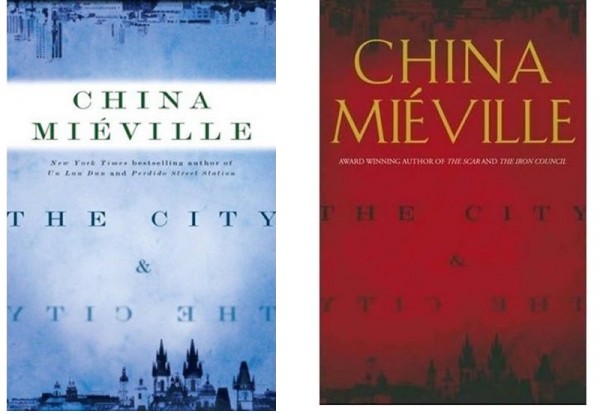
When we came across the theme of China Mievelle’s wonderfully wierd fiction story ‘The City and The City’ (introduced to us by Carol Breckenridge) it lent itself easily to a comprehension of Mumbai’s extreme contrasts. In his novel two cities are enmeshed in each other, but citizens of one are conditioned to ignore the evidences (sometimes staring at them in their face) of the other. The office of the ‘Breach’ ensures that the urban worlds remain parallel (even though enmeshed intricately) and disconnected. When a body from one city is found in the other – the narrative starts to flow and the reader discovers the rules through which people can co-exist and remain disconnected.
For anyone in Mumbai who has rolled up a window in an air-conditioned car – in the face of a highly professionalized beggar economy, or walked over a sleeping homeless body, or appreciated the new arty graffiti on a wall once housing streams of homeless families, the novel touches a raw nerve. Reminds you, with the same moral force of your conscientious school teacher – that there is a world out there, which you see and need to respond to in a manner beyond glazed eyes. And yet that would be a ridiculously simple allegorical connection to make with the book. Thankfully our comparison is not moralistic nor intended to create victim – based hysteria. There always are deeper reasons behind the resignation to accept contrasts, particularly when they are so obvious.
But what Mievelle’s world conjures is the ability to see how deeply etched are the invisible worlds that exist around us in many scenarios. It is an ideologically divided Europe that is the inspiring context of his novel. It can work in several ways. Reminding us that there are schisms in several cities – energetically cosmopolitan New York, aggressively regenerating Moscow, ethnically complexed Paris, or migrant enriched London. Its possible for the office of the Breach to operate in all kinds of ways. Its possible for us to be oblivious of the obvious in more ways than simply not seeing the faultlines that are all too evident. Its about finding out where the faultlines actually are. And they may not at all be where you look for them.