
Potter’s Tale
December 30, 2008
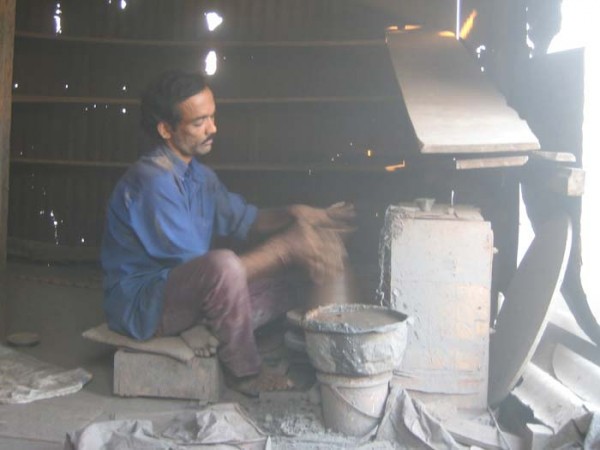
Ranchhod Savdas Tank from Kumbharwada, the potters neighbourhood in Dharavi, has very clear dreams and ambitions. He wants Kumbharwada to be known as the best pottery production center in the world. He wants the new generation of youngsters in Kumbharwada to find this traditional occupation so lucrative that they would take to it spontaneously. He wants to modernize production techniques, respond to the latest demands in terms of designs and choices and generally build on the hundred year old dynamic history of this neighbourhood that was founded by his ancestors and their families.
He is also very annoyed at the inability of the city, its media and civic authorities to see the value of his dreams and the fact that they are inextricably linked to those of the city at large. After all the city has been built on similar ambitions; it has seen enterprises emerge from nothingness, it has been nourished by the sweat of its hard-working resident-workers and it continues to evolve and modernize in many sectors.

Smoke coming out of the ovens where the Kumbhars bake their pottery.
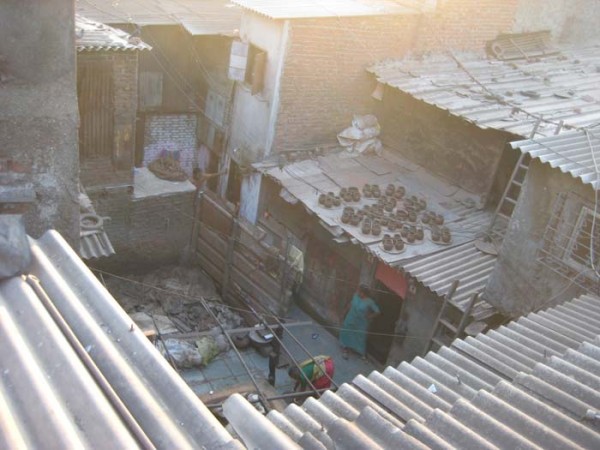
He finds it difficult to believe that the authorities cannot see a simple thing. That his neighbourhood is primarily an artisanal space around which the resident artisans have woven an intricate and interdependent structure of residential and work spaces that are so enmeshed, that it is impossible for one to be conceived off without the other even for a minute.
Tank, like other members of Kumbharwada in Dharavi, believes that for the city to do justice to its history of enterprise, it must rise to the occasion and recognize this simple fact. The best way of recognizing this is by letting this neighboruhood continue to evolve through its own inner logic. Not impose a development plan on it and learn to give importance to the voices of its residents and their choices.
Coming across someone like him is indeed an important reminder to all of us so invested in transforming the city. It is an important lesson for all urbanists, urban planners and urban historians. What the story of Kumbharwada represents is a vital moment in the history of cities that has the potential of making Mumbai a trendsetter.
A history, which acknowledges that homes and workspaces were decisively cut-off from each other only as recently as the industrial revolution and the impact of this incision was most strongly felt in the house of the artisan. Historically, if there was any space that used itself most creatively and productively it was the artisan’s workshop-cum-home that produced goods that circulated in the pre-industrial economy.
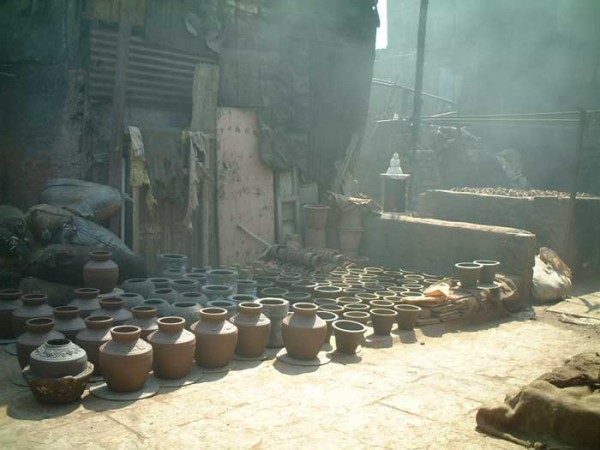
The gigantic scale of the modern city was unleashed through many forces – mainly energy-based revolutions – but its architectural character owes most to the atomic split that happened when the workshop-home of the artisan was splintered. Since then, the logic of separating residences from places of manufacture has shaped much of the way we think of cities.
However, cities like Mumbai are living examples of built-forms that do not reflect this neat divide. The artisanal home continues to exist in many different forms. Consider the fact that this form exists functionally, in some way or the other (as studio-homes, artists lofts and so many other examples) in the contemporary global economy.
All it needs is a little bit of imagination to transform neighbourhoods like Kumbharwada and use it to showcase Mumbai’s amazing spirit of enterprise. The pottery industry represents one of the few lucrative artisanal occupations that has survived mechanical competition thanks to the tastes of its consumers.
It would be nothing short of foolishness to over look this precious history.
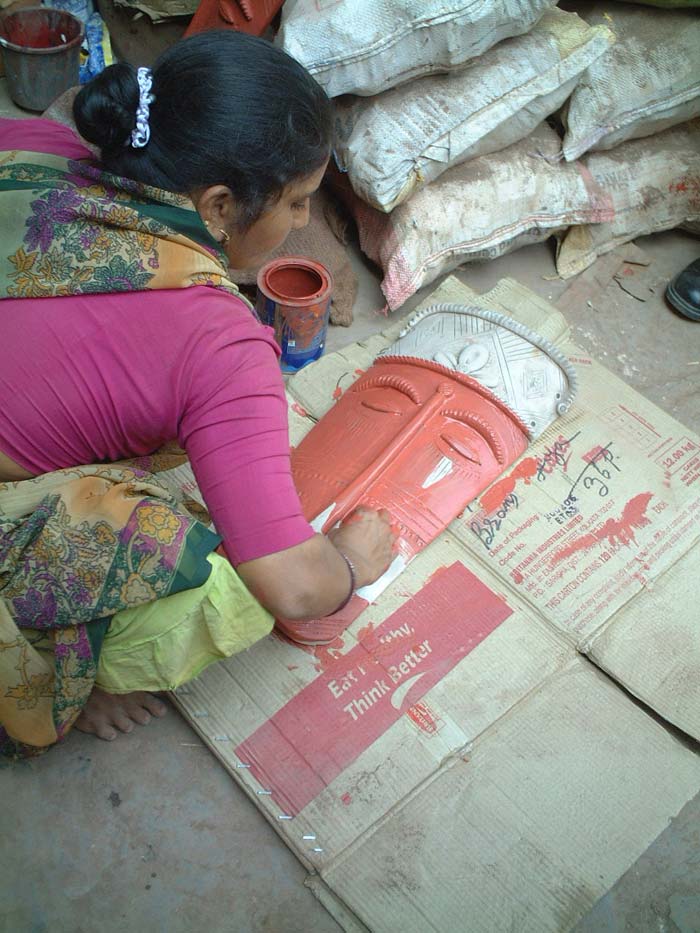
Photo credits: All but last by airoots team. The last taken by KRVIA
Published in the Mumbai Mirror, December 31st 2008

