
Tokyo Future Slum
August 26, 2008
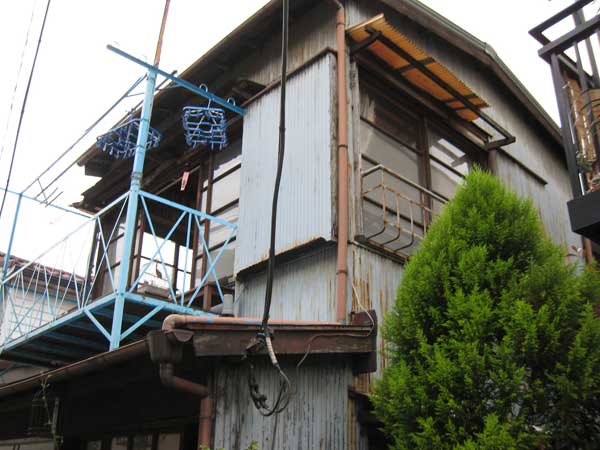
Half of Tokyo was flattened during World War II. It was then rebuilt in haste to accommodate people’s need for shelter and livelihood. There were big master plans for Tokyo, but because of budgetary and time constraints the central government instead focused on infrastructure, leaving residential and commercial development to local actors.
This pattern of development has basically been maintained even till today and explains why Tokyo has both; one of the best infrastructures in the world and a housing stock of great variety. Typical low rent flats in Tokyo, such as mine, get very cold in the winter and very hot in the Summer
The residential urbanism of Tokyo is characterized by low rise buildings and high density. “In spite of some deliberate planning attempts to widen major streets and introduce reinforce concrete buildings the majority of neighborhoods were characterized by flimsy wooden constructions, and slum-type housing dominated many areas until the 1960s†(Carola Hein 2003).
While the architecture has incrementally been upgraded, the urban typology is still very much informal and slummy-looking, with extremely narrow and labyrinthine streets, self-made looking houses, often with parts added-on, made of material such as metal sheets and wood. Moreover most neighborhoods are very much mixed-use. Walking through the countless residential streets of Tokyo always leads to fascinating findings. Below are some shots of a recent walk in the historical streets of Yanaka.
What I find fascinating is that we can clearly see the past of Tokyo as a slum. How much of a good thing it was that these slummy areas were not master planned and “redeveloped†but rather left to develop on their own and retrofitted with modern infrastructure. Tokyo is a model of development for developing cities which are so often ashamed of their slums and dream of vertical modernity. Slum is vernacular architecture. This is history and culture. Don’t destroy it, develop it!

What a beautiful shack, even the electric pole is bent.

Step inside and it is a wonderful mess.

This is NOT Brazil. This Tokyo!

Metal sheets, the characteristic material of slums around the world…
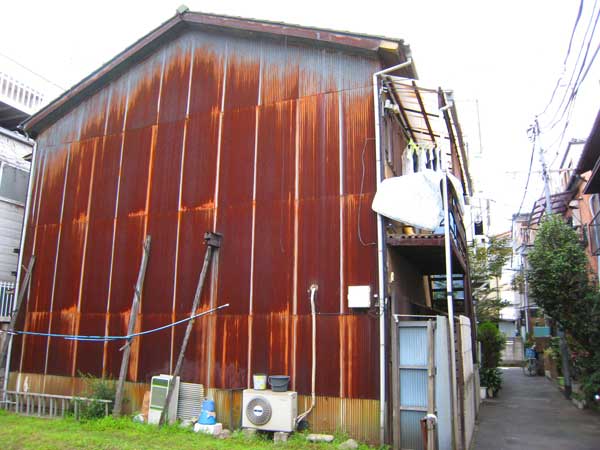
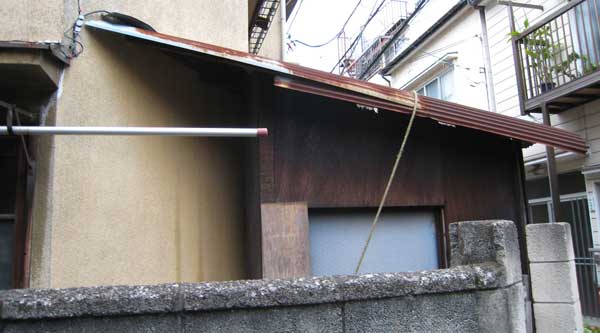
Informal add-on to the house. Incrementally developing.
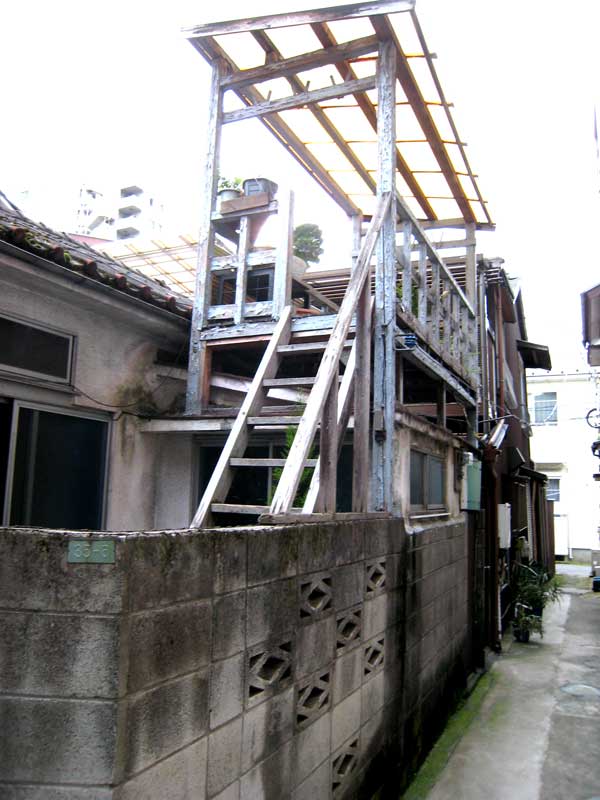
What about building a deck on the roof?
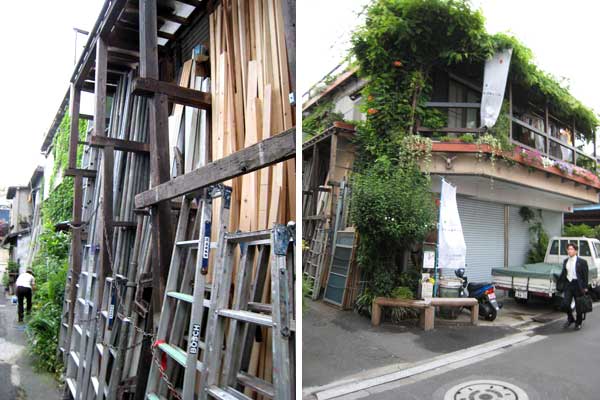
And if you need wood or a ladder you can get it from the neighbor
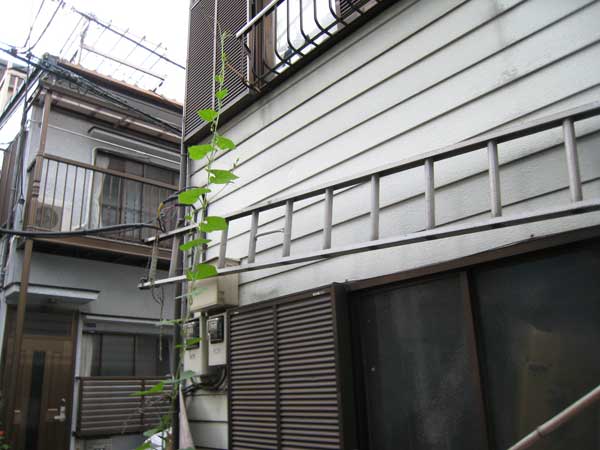
Below a sento, traditional Japanese public bath.
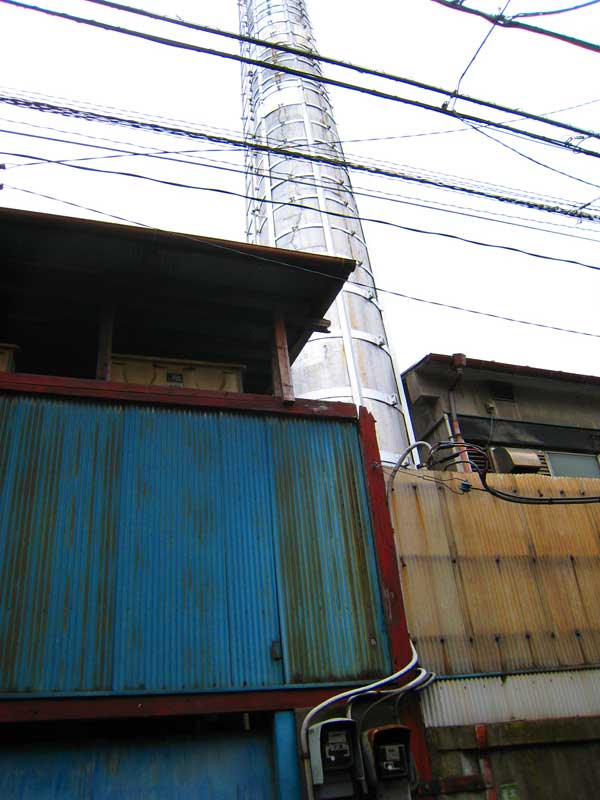
Below, my favorite wood house. Is it traditional architecture or a slum-type house? And what’s the difference anyways?

For more on the Tokyo model of urban development, from slum to future city, you can take a look at a memo Rahul and I prepared for the “Slum Rehabilitation Authority†(SRA) in Mumbai. This is the government agency in charge of the “Dharavi Redevelopment Projectâ€.
I’m from Rio and I must say that you’re totally wrong in this comparison. If Tokyo had a peculiar model of urban development, Rio has no model at all.
You forgot to say that we have whole families living in tiny boxes, sometimes 10 people or more. Plus, the shacks were built on occupied land, without permission from the city hall. No one has ownership of their land and to the eyes of the law they are just invaders.
There’s no infrastructure too. Most of the time, the sewage is discharged in natura in rivers close by. There is no transportation, as no kind of public transport can cross those narrow “streets”.
And you seem to completely ignore – or perhaps you’re just too naive – the fact that our ONE THOUSAND shanty towns are controlled by gangs with heavy weapons hence my city is one of the most violent in the world.
You say “don’t destroy it, develop it”, and I respectfully disagree by saying TEAR IT DOWN, BUILD DECENT HOUSES AND LET PEOPLE LIVE IN GOOD CONDITIONS (as you probably do, while typing this kind of nonsense in the comfort of a first world house…).
Comment by Leonardo — February 28, 2010 @ 7:36 am
Dear Leonardo,
Thanks for your passionate response. We respectfully disagree. And no..we dont live in the comfort of the first world at all. We are based in Mumbai and Goa and work extensively from Dharavi. Do check our website http://www.urbz.net for further details.
best
Comment by airoots — March 9, 2010 @ 2:55 pm